
Enterprise sites aren’t just larger versions of small-business websites. They are massive ecosystems where one glitch can impact millions of URLs. Larger teams and systems mean that one wrong thing can affect multiple departments.
Unfortunately, treating a 100,000-page site like a local blog sets you up for failure. Traditional checklists crumble under the weight of technical debt, team complexity, and massive site architecture.
The challenge isn’t finding issues. It’s managing chaos. You need to know which lever moves the needle without crashing servers or wasting developer time.
In this guide, we walk through a proven enterprise SEO audit framework designed for scale. We’ll show you how to transform thousands of findings into a prioritized, ROI-focused battle plan. You’ll see how to turn a mountain of errors into a manageable backlog that drives real revenue.
Highlights
- Enterprise SEO audits demand a shift from simple checklists to complex prioritization. This is due to the sheer volume of pages and stakeholders.
- A successful audit follows a four-stage lifecycle: Strategic planning, execution, prioritization, and implementation.
- The Impact vs. Effort Matrix is your best tool. Use it to separate quick wins from resource-heavy projects that might stall your roadmap.
- Secure buy-in from engineering and leadership early. This ensures your audit findings don’t just sit in a spreadsheet gathering dust.
- Translate technical fixes into projected revenue and ROI. It is the only way to transform audit data into executive action.
Why traditional SEO audits don’t work at enterprise scale
Auditing 500,000 pages versus 500 is a different ballgame. On small sites, you can manually fix meta descriptions or tweak code. In an enterprise-level organization, that hands-on approach is impossible.
Enterprise SEO navigates a maze of legacy code, subdomains, and competing departments. You aren’t just fighting for search engine rankings. You’re fighting for developer time in a full backlog.
Plus, technical debt piles up fast. A single small JavaScript error can destroy crawlability across an entire catalog. That single error could bring down traffic and revenue to a standstill for hours. That’s a lot of missed opportunities, wasted ad spend, and potentially missing KPIs for that month.
In enterprise SEO audits, speed versus thoroughness is a constant trade-off. Running full crawls with Screaming Frog or Lumar on millions of pages is risky. You need precise crawl settings to avoid crashing production servers.
This complexity breeds paralysis. In fact, according to the Conductor 2025 State of SEO Report, enterprise teams often struggle with organic marketing maturity. Teams get overwhelmed by data and stop moving forward.
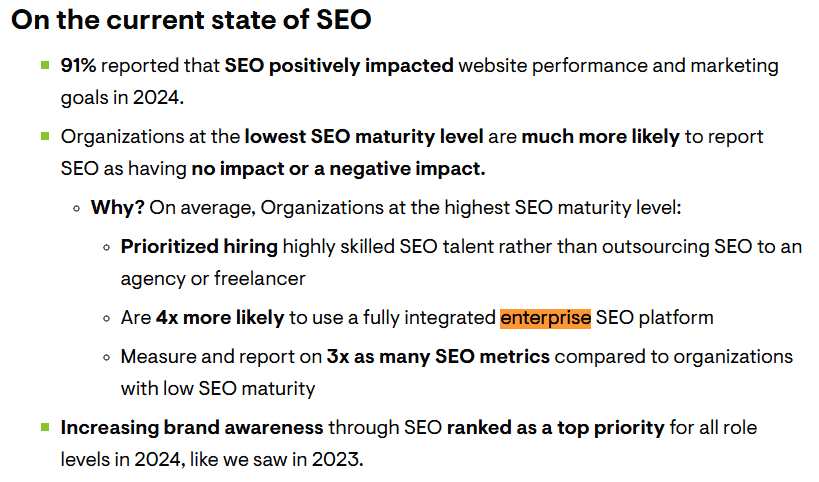
This is why resource constraints are usually the main culprit when optimizing SEO in enterprise companies. In fact, it’s in the list of the most common issues plaguing SEO efforts.
Stage 1: Strategic planning and alignment
Successful SEO audits at this level begin with alignment, not analysis. Because if you don’t know who will fix the problems, you’re just creating a list. It becomes an expensive to-do list that no one will read.
Defining scope and securing stakeholder buy-in
Defining your scope is critical. Are you auditing the entire domain? Maybe just a specific country folder or the blog subdomain? Narrowing your focus helps you dig deeper to find actionable insights.
Once you set the scope, identify your stakeholders. Know who owns the code or parts of your website. Find out who writes the content and who approves the budget.
Usually, this involves product managers, developers, and content leads. You need executive sponsorship early. Can you answer “Is SEO still worth it?” to your leadership? If not, you won’t get the resources to implement your findings.
Finally, set realistic timelines. An enterprise SEO audit isn’t a one-week project. It can take months to crawl, analyze, and roadmap the solutions. Be clear about this upfront to help manage expectations, especially during critical seasons (e.g., leading up to Black Friday) when SEO changes might be too risky.
Goal mapping: Connecting audit findings to business outcomes
Link every technical fix to a business outcome. Stakeholders don’t care about canonical tags or hreflang tags. They might not even know what these are. But they do care about revenue, leads, and market share.
For instance, improving indexability isn’t just a technical win. It means more products are visible in search engine results. That leads to increased sales.
Fixing crawl budget waste means Google discovers your new inventory faster. This reduces your time-to-rank and adds to early sales.
Team roles and tooling
You can’t execute an enterprise SEO audit alone.
Define clear roles before you start. For example, the SEO lead handles analysis and strategy. The dev team handles code changes. And the content team manages rewrites and content optimization.
You also need the right tools, as unfortunately, free tools won’t cut it. You need enterprise-grade software like Lumar (formerly DeepCrawl), Botify, or BrightEdge. Or try Screaming Frog SEO Spider running on a powerful cloud instance.

Log file analysis is essential, too. It helps you understand precisely how bots interact with your server.
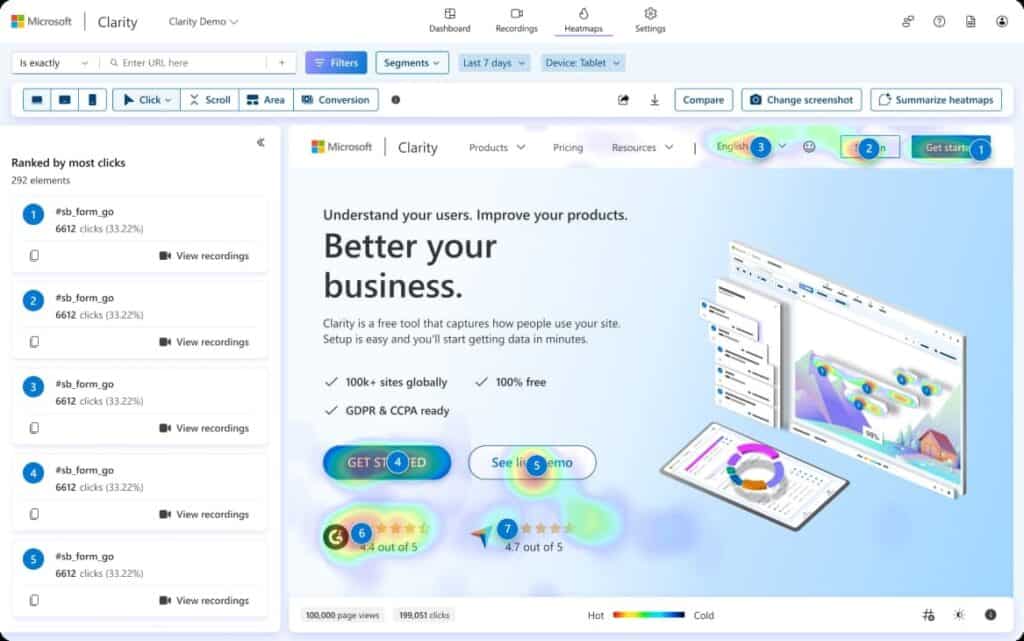
Make sure you have access to Google Search Console (GSC), Google Analytics 4, and Bing Webmaster Tools. Grab heatmaps and session recordings from tools like Microsoft Clarity, as this will help you improve user experience while you’re at it. You’ll need historical data to spot trends and validate your findings.
Stage 2: Execution of the scalable audit
With your team aligned and goals set, it’s time to execute. We break the audit down into three critical dimensions: technical, content, and off-page.
Technical audit: Beyond basic issues
For an enterprise site, a technical audit goes beyond checking for 404 errors. You are looking for systemic issues. These affect thousands of pages at once.
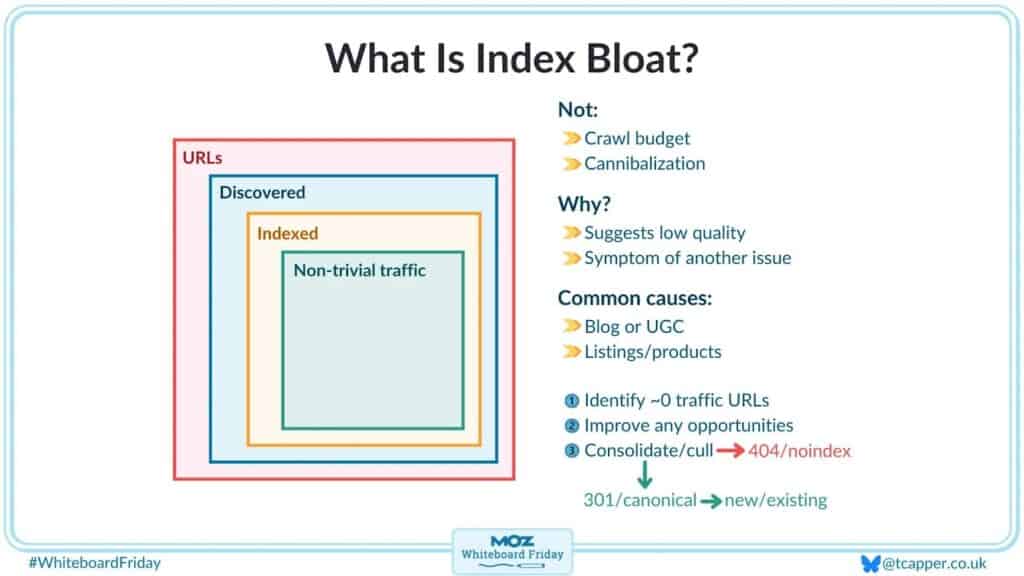
For instance, index bloat is a massive killer. Large sites often generate thousands of low-value pages. Think about things like faceted navigation, parameter URLs, or print-only pages. These eat up your crawl budget for no real gain. Flag them and block them where needed.
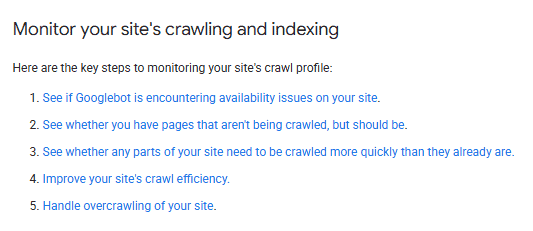
Crawl budget waste is another silent assassin. Bots might spend all their time crawling useless session ID URLs. If they do, they won’t get to your money pages. Google’s crawling guide also suggests:
- Optimizing page speed for faster crawling
- Avoiding long redirect chains
- Removing duplicate content
You also need to look at complex rendering problems. Many enterprise sites rely heavily on JavaScript frameworks like React or Angular. If you aren’t testing for JavaScript SEO, you’re flying blind.
So, make sure search engines can render your content. Check for Single Page Application (SPA) issues and confirm that your content loads in the DOM initially.
Your SEO audit should include must-checks like SSL configuration, HTTPS compliance, Hreflang errors, and XML sitemap logic. These are the foundations of your technical SEO.
A word of advice: Don’t let anyone tell you these basics don’t matter. AI grifters want you to think SEO is dead. But technical excellence is more important than ever for AI Overviews and LLMs. SEO is only dead for those who don’t know how to maintain and scale organic traffic.
Content audit: Finding consolidation opportunities
An enterprise content audit is about data analysis. Look for patterns in performance and what the website is missing.
Start with a content gap analysis. Where are you losing ground to competitors?
More importantly, look for duplicate content and keyword cannibalization. Enterprise sites often have ten pages targeting the same keyword clusters. This confuses Google and splits your authority.
Then, identify thin content. These pages have little value, so they should be pruned or consolidated. Having thousands of empty category pages wastes precious team effort. You need a strategy for consolidation.
These are the same concepts you need to follow if you’re about to publish 1000s of AI articles for SEO. Otherwise, your quality and user value will diminish, and your site will become bloated.
Off-page and authority audit
Your backlink profile is a massive asset, but it can also be a liability. At the enterprise level, you likely have millions of backlinks.
Assess link quality at scale using tools like Majestic or Ahrefs. Look for toxic backlinks that might trigger algorithmic penalties.
Google is good at ignoring spam, but a massive influx of low-quality links is still a risk.
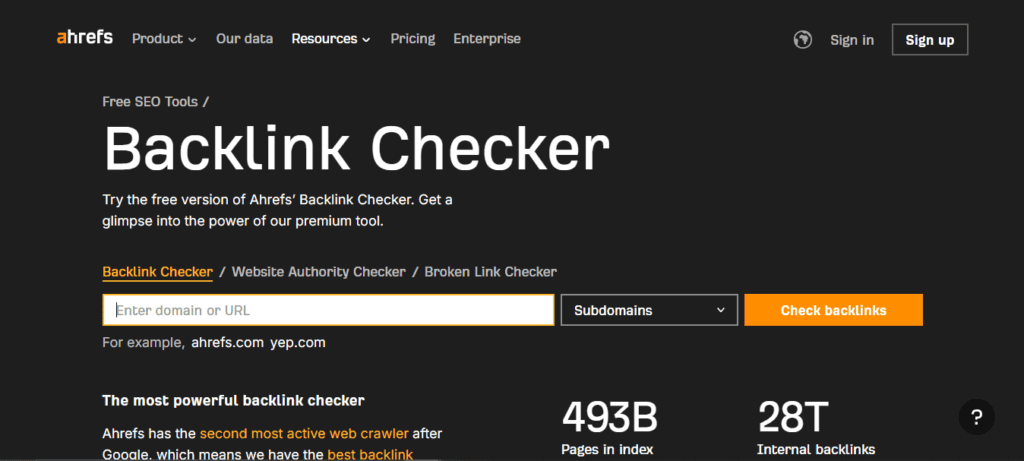
Next, analyze your brand mentions. Are people talking about you without linking? This is a huge opportunity for link audit and reclamation. Compare your profile to competitors to find gaps.
And if your team tells you that they can’t find good link builders, start doing it internally until you partner with an agency. Focus on leveraging existing brand authority and sharing quality content. Earn links naturally with PR and data storytelling.
Stage 3: Prioritization – The core value proposition
An enterprise SEO audit might uncover 500 different issues.
But you can’t fix them all. Trying to do so will just annoy your dev team. So you need to prioritize. The goal is to focus on the biggest bang for their buck.
The impact vs. effort matrix framework
The best way to prioritize is using an Impact vs. Effort Matrix, because it turns a chaotic spreadsheet into a clear roadmap.
This is a simple 2×2 grid where you plot every issue found.
- Impact: How much will this improve organic traffic, revenue, or brand protection? Score this from 1 to 10.
- Effort: How hard is this to fix? Does it require ten developer hours or 100? Is it risky? Score this from 1 to 10.
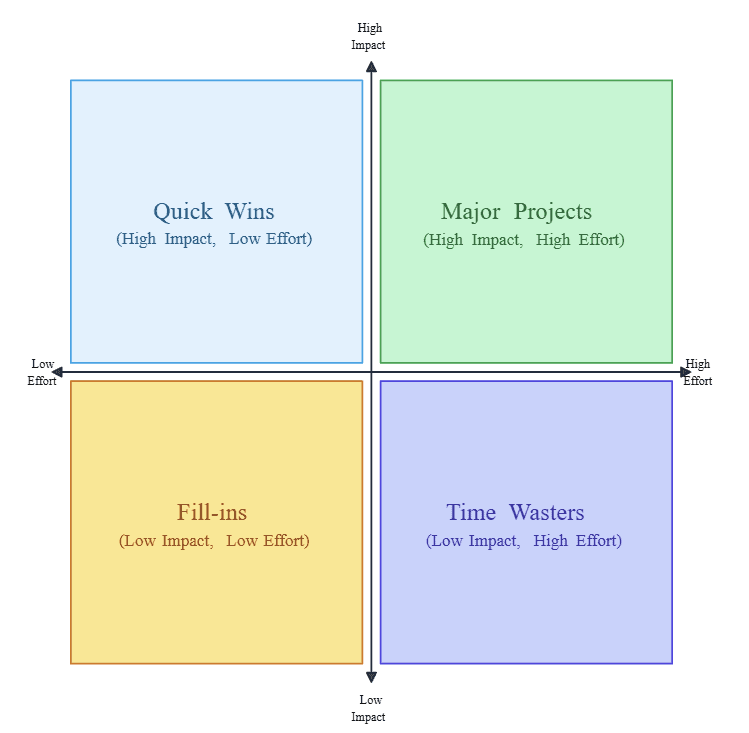
High-Impact, Low-Effort items are your gold mine. Do these first. In the meantime, deprioritize or ignore Low Impact issues.
High Impact and High Effort are your strategic projects for the next quarter. They take time, and that means planning and getting approvals.
Quick wins vs. long-term projects
You need a mix of quick wins and long-term projects to keep things moving.
Quick wins are the low-effort tasks: updating meta titles, fixing broken links, and adding schema to key pages. They show fast progress and keep stakeholders happy.
Long-term work carries more weight. This includes site migrations, restructuring URLs, or adding Server-Side Rendering (SSR) to a JavaScript setup. These take time and more resources, but they create a lasting impact.
Try to balance the roadmap. Deliver quick wins while chipping away at the big rocks.
Case study
Let’s look at a real-world example to see how this prioritization works in practice.
Form Health – Ranking drop recovery
Form Health, a health and wellness brand, experienced a sudden drop in rankings for a key landing page. The Wegovy product page fell from position 6 to 10. This significantly impacted traffic.
This is a classic enterprise headache: a high-value page suddenly underperforming despite good content.
The team at uSERP worked with Form Health and applied a prioritization framework:
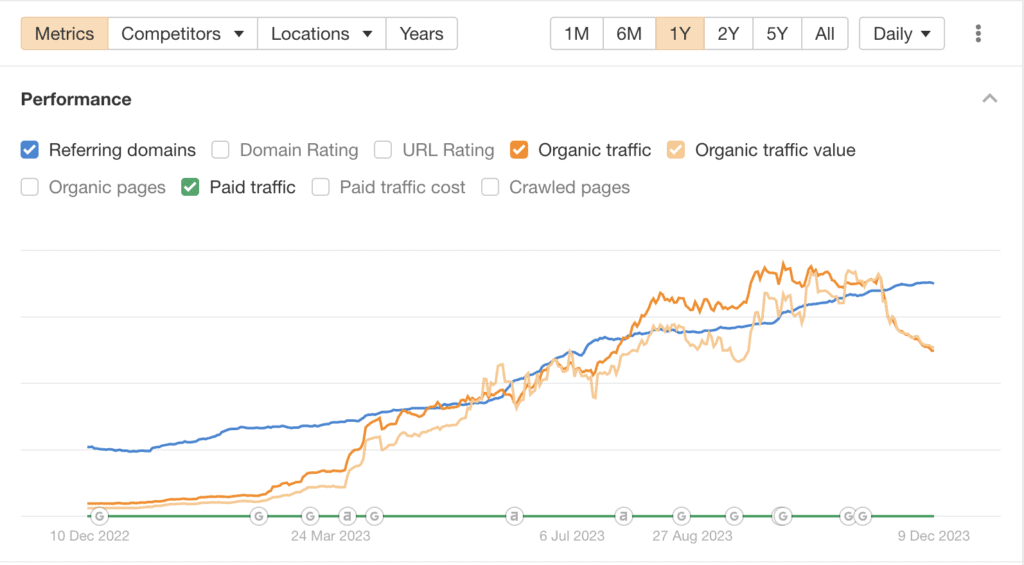
- The solution: They prioritized this as High Impact / Medium Effort. They made keyword adjustments and optimized content placement. Then they focused on specific on-page SEO elements. At the same time, they ran a focused campaign to build authoritative backlinks.
- The results: This targeted approach worked. They secured over 1,200 new backlinks from 255 referring domains. The homepage now ranks for over 24.8k keywords. Traffic jumped by 55.6k visitors per month. Their Domain Rating (DR) improved by 15 points.
Stage 4: Implementation and proving ROI
Now’s the time to get your fixes out of the spreadsheet and into the production environment.
Operationalizing fixes
Speak the developers’ language by integrating your SEO strategies into their workflow. If they use Jira, create Jira tickets. If they use Trello, use Trello.
Write clear, actionable tickets and include “Acceptance Criteria.” The developer needs to know exactly when the job is done. Instead of saying “Fix speed,” say “Improve Largest Contentful Paint (LCP) to under 2.5 seconds on the product template.”
Respect their process. Tickets need to go through QA, staging, and then production. Monitor changes after deployment to ensure there are no unintended consequences.
This disciplined approach is the future of SEO. Be a technical partner, not just a marketer.
Defining KPIs and tracking success
Prove that your changes worked by defining target KPIs:
- Technical KPIs: Look at crawl stats, indexation status, Page Speed scores, and Core Web Vitals. Are response codes healthy?
- Traffic KPIs: Monitor organic traffic, impressions, and click-through rates in Search Console.
- Business KPIs: Track conversion rate, revenue from organic search, and lead generation.
Use an SEO provider to track these, or even Google Analytics or SearchAtlas. Use whatever SEO provider tool you have. Report on them weekly or monthly to keep momentum.
The ROI story: Presenting results to executives
When presenting to the C-suite, don’t talk about canonical tags. Talk about money.
Build a narrative: “We invested $50K in this audit and implementation. It took three months. As a result, organic visibility increased by 40%. This drove an additional $500K in revenue.”
Use visual dashboards. Executives love charts that go up and to the right. Show the correlation between technical fixes and traffic growth.
Get started on your enterprise SEO audit
Mastering an enterprise SEO audit is about controlling chaos. You can’t fix everything, but you must fix the right things. So, move from a checklist mentality to a strategic framework. That’s how you navigate the complexities of massive websites.
Remember the four stages. Strategic planning aligns your team. Execution uncovers technical SEO and content issues. Prioritization focuses on high-impact items. Implementation proves value to executives.
This is how you turn a list of 10,000 errors into a profitable roadmap. Use this framework to take control of your enterprise site and drive real growth.
Ready to take your enterprise strategy to the next level? Subscribe to the SEO Power Plays newsletter for more expert advice on navigating the changing world of search.