It is frustrating to watch your organic traffic go up while your revenue stays flat. You spend months on keyword research and backlinks, but your website visitors aren’t taking the desired action.
This usually happens because you treat search engine optimization (SEO) and conversion rate optimization (CRO) as two different jobs.
When you optimize only for rankings, you’re only winning half the battle. The most profitable sites today treat SEO and CRO as a single discipline. They focus on the whole journey, from the first click to the final sale.
This unified approach makes every search query more valuable for your business.
This guide gives you a framework to stop wasting traffic. You will see how to turn search results into revenue by fixing your website performance. We will cover everything from technical SEO to user behavior analysis to help you grow faster.
By the end, you will know exactly how to turn a visitor into a customer.
Highlights
- SEO + CRO means treating rankings and sales as parts of the same goal, not separate projects.
- Core Web Vitals updates can lift both your visibility and conversion rates by as much as 20%.
- Matching your content to search intent is the fastest way to boost conversions.
- A shared audit helps you find quick wins that help both SEO and CRO metrics at the same time.
- Tracking shared KPIs for ranking and revenue ensures you get the best ROI for your efforts.
Building a technical foundation for traffic and sales
Many people think technical stuff like page speed is just a technical chore for Google, but it is a huge part of the user experience. When your website is fast, users stay longer.
This shared technical stack is where combining SEO and CRO starts to pay real dividends.
Why speed is your best sales tool
Core Web Vitals are metrics that tell you how users feel about your site speed.
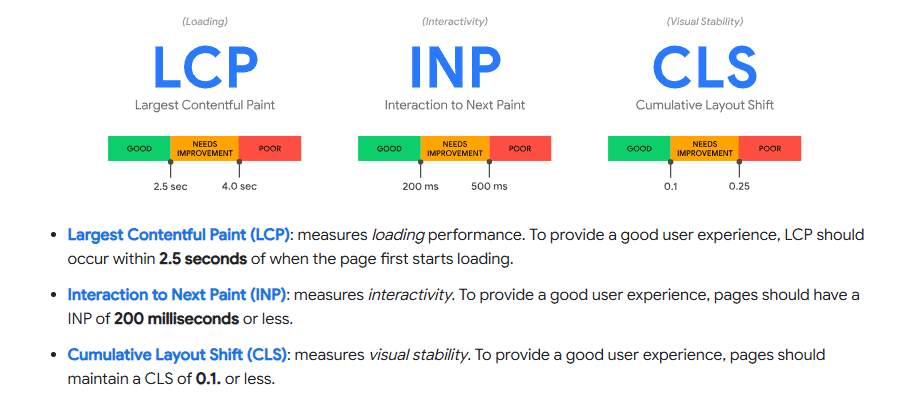
Google uses these to rank you, but the real prize is building trust with the user. If a page is slow, your bounce rates will go up because people hate waiting.
A slow site looks broken and makes buyers nervous. But fast pages keep people on your site to see your offer.
Especially in a time when we have AI-generated answers and can get knowledge or recommendations on any topic from LLMs like ChatGPT, people want immediate answers.
So, when you improve your website speed, it becomes easier for people to buy from you. In a crowded market, speed is often what separates a sale from a bounce.
In a recent web.dev case study, QuintoAndar reduced mobile interaction to next paint (INP) by about 80%. As a result, they saw a 36% year-over-year increase in conversions. This proves that page load time is not just a technical one. It’s a business metric that matters for marketing departments, executives, and founders.
If you are planning a website redesign SEO project, speed must be part of the plan from day one. Fixing a slow site later is much more expensive than building it right the first time.
Winning the mobile-first game
Mobile is no longer just a side project. Google uses mobile-first indexing, meaning they rank you based on your mobile site. If your mobile version is slow or hard to use, your search engine results page (SERPs) rankings will drop everywhere.
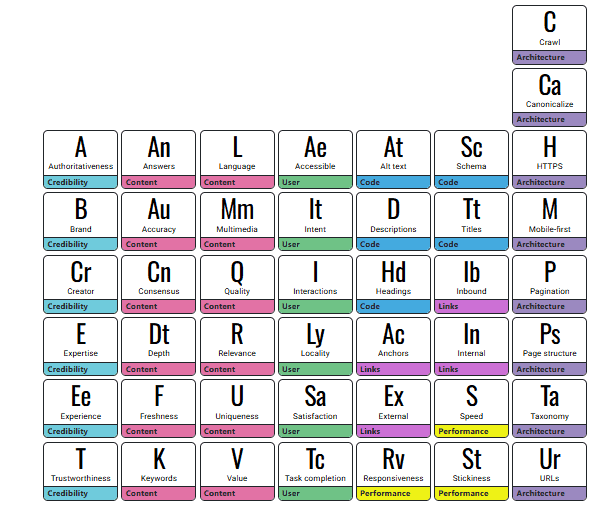
Mobile is where most of your customers are right now. If your responsive web design feels clunky, you are losing money. Mobile users have no patience. They are often on the move and need answers or products quickly. If your call to action (CTA) is too small, they won’t click it.
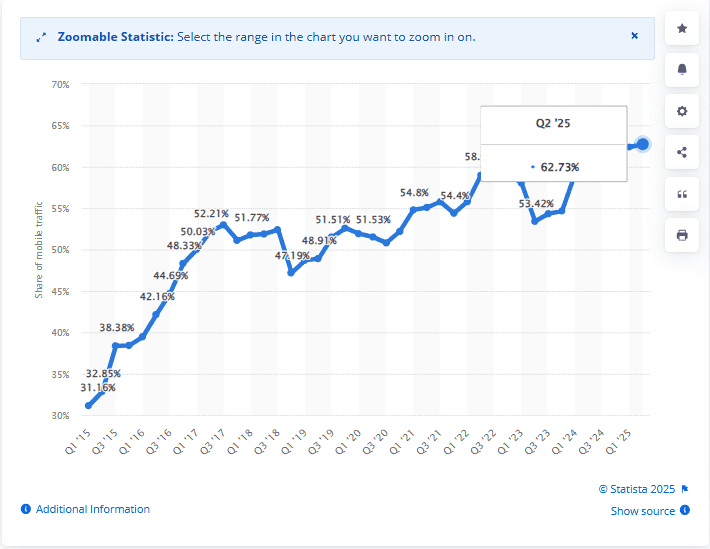
Data from Statista shows that mobile generated over 62.63% of all web traffic in Q2 2025. This is the new standard for every site. If your website’s mobile performance is poor, you are ignoring half your market. Make sure your load times are fast on all mobile networks.
Navigation that leads to the checkout
A good site structure helps Google crawl and find your best pages. It shows the search engine what matters most. But it also helps the user. When your menus are simple, people find what they want without getting lost. This leads to more sales.
Internal linking keeps your site connected. It moves authority to your landing pages to help them rank higher. It also guides website visitors through your site. If they read a blog post, a good link can send them to a product that solves their problem.
Plan your links depending on the context.
Navigational menus should be easy to find, short, and to the point, just like street signs.

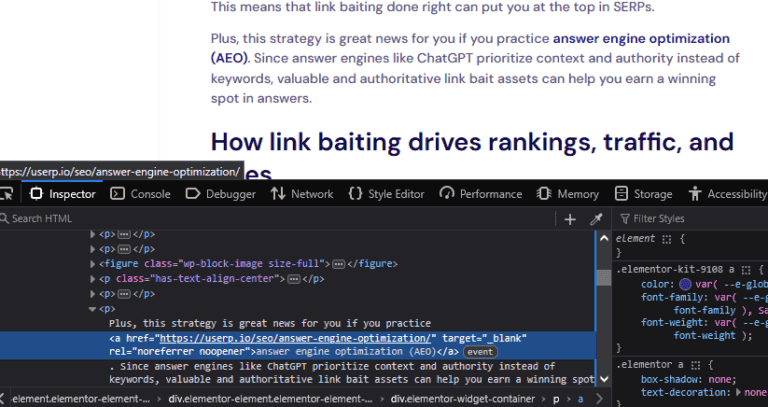
Soft internal links (like here in this blog post) should be natural and very contextual. They should read like they’re almost there by accident, but intentional enough to give more help to the reader and keep them on your site.
High-intent links (like those on sales pages or in a quiz to motivate the reader to take action) should be enticing. They usually speak about the action the user should take.
They often add emotion and future-pacing to help the reader visualize the benefit. This makes it easier for them to say yes and progress naturally.
Larger sites often have messy structures that hurt their rankings. They’re also much more challenging to fix due to their sheer size and complexity. Here’s where you might need an enterprise SEO audit to find these issues before they cost you too much.
Matching your content to what users actually want
Good content is about more than just keywords. It has to match the intent of the user.
Some people want to learn, and others want to buy. If you give a sales pitch to someone who just wants a quick answer, they will leave.
That’s why you need a plan for every stage.
Understanding the intent spectrum
You need to prioritize intent for two reasons: building your lead pipeline and making the sale.
Building your lead pipeline
When users search for answers, they have informational intent. They use broad terms to find blog posts or guides.
Your SEO goal here is to rank for these questions and show your authority. If you help them for free, they will trust you when they are ready to spend.
For CRO, this stage is about getting leads and building market awareness. You probably won’t sell a big item on a “how-to” page, but you can get an email.
Use lead magnets like checklists to grow your list. Use videos with personal stories, examples, and failures to show them what’s possible and build trust with your leads. These micro-conversions fill your conversion funnel for the future.
Making the sale
At the end of the journey, users search for product pages or terms like “buy.” Your SEO goal is to be the first thing they see in the search results. These are your most valuable clicks.
For sales, you need to remove every doubt. Use customer reviews and video testimonials to show proof. Many top brands now use video sales letters or long-form copy to address objections before users even ask. This landing page copy builds confidence and drives higher sales.
For leads from other sources, such as paid advertising or your email list, when they click a link, focus on CRO. These are hot leads and potential buyers, and you need specialized mechanisms and angles to motivate them and help them believe they can get results with your product or by working with you.
Using data to find hidden wins
To truly optimize, you need to look at two things.
First, use Google Search Console to see your click-through rate. If your rankings are high but clicks are low, your title tags or meta descriptions are likely too boring. Fix those to get more organic traffic.
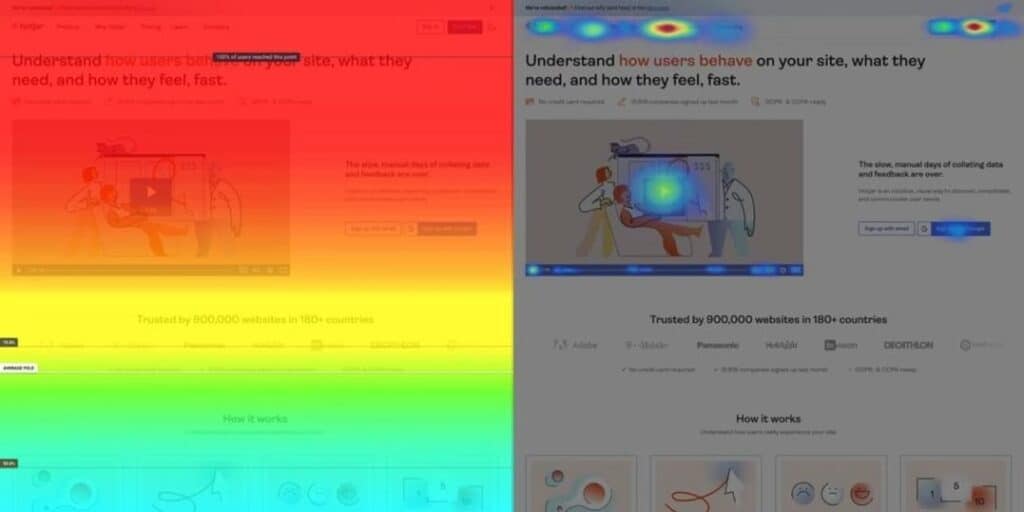
Then, use heatmaps (right image below) and scroll depth (left image below) to see what users do on the page. If people land but don’t buy, you have a CRO problem. Your button may be too low, or your form may be too long. Track these conversion events to see exactly where people quit.
Local shops should also look at where their traffic comes from. Local SEO tools can help you track these specific users. If you have a franchise or physical business across different locations, you definitely need local SEO tools to optimize products and services for each location.
A simple framework for your SEO and CRO audit
A unified audit is how you find the best growth spots. Instead of your teams working alone, they should look at the site together. This process helps you find pages where small tweaks create big revenue jumps.
Step 1: Finding your best opportunities
Start with your numbers. Open Google Analytics and find your top 10 pages for traffic. Then find your top 10 pages for sales. Usually, these lists don’t match.
The pages on both lists are your most important assets. These are your “money pages.” If a page has traffic but no sales, it needs CRO. If a page has high sales but no traffic, it needs better SEO. Focus your time on these first.
Step 2: The SEO health check
Check the basics for your top pages. Are they indexed? Sometimes a mistake in your robots.txt settings blocks Google from crawling. You should also look at your Core Web Vitals scores. If a page is slow, you are losing money every hour.
There are many common issues plaguing SEO efforts that can stop your growth, such as your H1s. Do they answer the user’s question? Do they match the page’s content?
If someone searches for a guide but gets a sales pitch, they will leave. This causes high bounce rates, which hurts your rankings. You must match your content optimization to what users want.
Research by ContentSquare shows that technical frustration is the primary driver of site abandonment. Their 2024 benchmark report found that slow page rendering increases bounce rates by over 15% across almost every industry. Speed is not just a perk. It is a survival tool.
Step 3: The CRO experience check
Now look at the page as a customer would. Is your unique selling proposition (USP) at the top? Users should know what you do in three seconds. If they have to hunt for it, they will go back to the search results.
Make your main button stand out, and prioritize trust. People are scared of unknown sites, so add security badges and clear guarantees. If you use schema markup, you can get star ratings to show in the SERPs. This builds trust before they even arrive at your site.
Step 4: Taking action on your findings
Now you need a plan. List all the fixes you found.
Do the easy ones first, like moving a button or changing a title. Medium tasks include adding review schema markup to your site.
Big tasks might be a full rewrite of your landing page copy. Track your results as you go. You want to see your organic sessions go up and your sales go with them. Shared KPIs are the best way to keep your team focused.
If your SEO team only cares about traffic, they might bring in the wrong people. If the CRO team only cares about percentages, they might ignore how much traffic is coming in. Sharing goals makes your website more profitable.
Conclusion
To grow your business, you must stop treating SEO and CRO as different jobs. When you combine them into an SEO and CRO strategy, everything works better. You stop wasting money on traffic that bounces, and you stop wasting time on pages no one sees.
Your technical health and your content strategy should both focus on the user. Rankings without conversions don’t pay the bills. But sales tweaks without traffic won’t help you scale (at least, organically). The best brands master the whole path from click to checkout.
Start with an audit today. Pick your top ten pages and look for quick wins. You will likely find a lot of money left on the table. Then, make SEO and CRO part of your daily plan. Focus on the data that matters for your revenue.
Subscribe to the SEO Power Plays newsletter for more tips on how to grow your traffic and sales.