
If you’ve ever shopped around for SEO packages, you’ve likely hit a wall of confusion almost immediately. You send out three RFPs and get three wildly different numbers back:
- An SEO agency sends a proposal for $3,500 a month
- A larger firm charges over $10,000
- One freelancer quotes you $500
It’s enough to make any founder wonder if they’re about to be scammed or if they’re missing something crucial.
Here’s the reality I’ve seen after years of running uSERP and consulting with hundreds of brands: price variance isn’t arbitrary. It reflects three critical levers: scope, scale, and required expertise.
This guide is designed to help you audit your own needs and analyze your specific options. It’ll allow you to match your budget with your actual business objectives. By the time you finish reading, you’ll understand why a local bakery doesn’t need an enterprise technical audit and why a SaaS unicorn can’t survive on a $500 retainer.
Let’s cut through the noise and find the right fit for you.
Highlights
- Deliverables matter more than buzzwords: Understand the difference between a “foundational technical audit” and “log file analysis” to avoid paying for fluff.
- Audit before you buy: Your business model (Local vs. SMB vs. Enterprise) dictates the scope you need, not just the price you want to pay.
- Transparency is the ultimate metric: If an agency won’t show you their link-building methods or reporting structure, walk away.
- Watch for hidden costs: Setup fees, content creation, and premium tool access often fall outside the base retainer.
Defining your business need (the buyer’s self-audit)
Buying a search engine optimization (SEO) package is like buying a suit:
- You can grab one off the rack
- Or you can get it tailored
The “off the rack” option works for some. However, if you’re trying to make a massive impression in a competitive room, it might fall flat. So, before we even look at a dollar sign, you need to look at your business.
Here’s a simple decision tree you can start with to decide if it’s even time for you to invest in SEO:
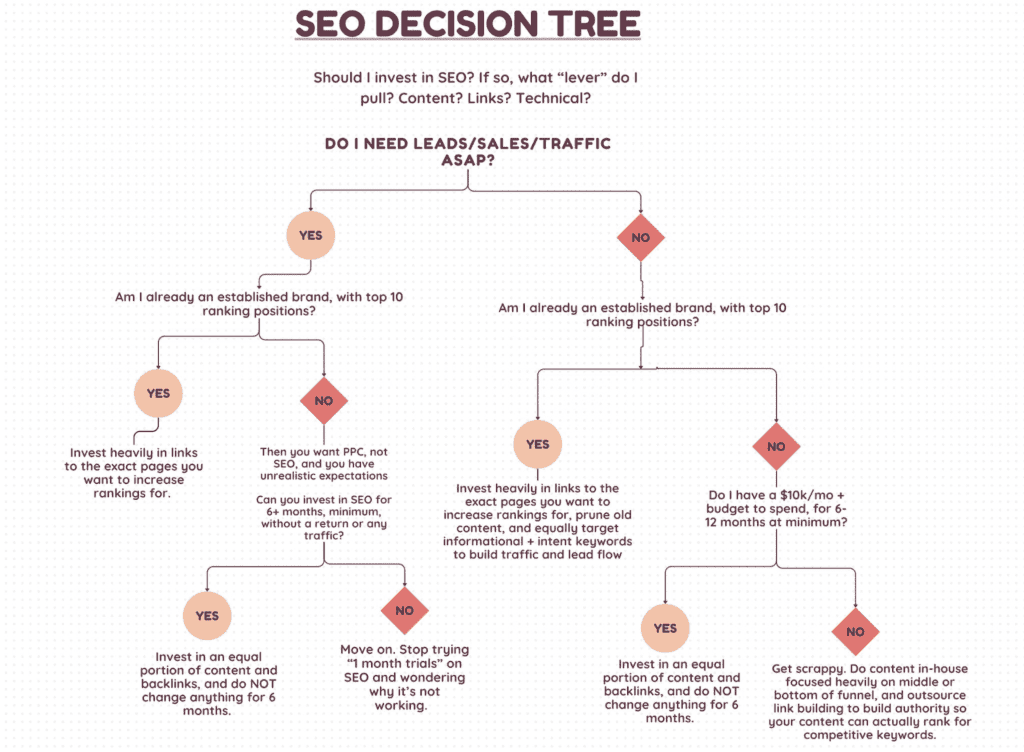
If you decide it’s time, do a quick SEO self-audit using a tool like Semrush to determine the scope, scale, and level of SEO expertise required. This will help you establish which “lane” your company should follow. SEO agencies generally segment business needs into one of the following three distinct buckets:
Local or service area businesses
If you’re a dentist, a law firm serving a specific county, or a plumber, your battleground is the local pack. You don’t need to rank nationally for broad terms. What you need is to dominate the map.
As a local or service business, your scope should focus heavily on:
- Name, address, and phone number (NAP) consistency across the web
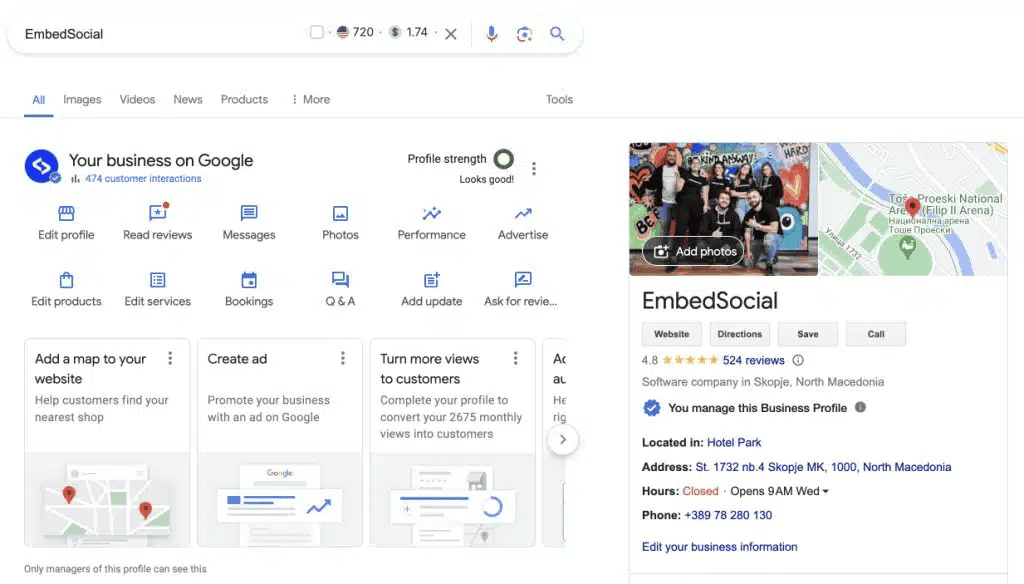
- Google Business Profile optimization
- Local search visibility
The level of expertise required here is execution-focused. You need a team that knows local citations, local directories, and review management inside and out.
Small-to-medium E-commerce or B2B
This is where things get trickier.
If you’re selling specialized software or shipping niche products nationwide, local landing page SEO won’t cut it. You need organic search results that drive qualified traffic from all over the country.
The scale increases significantly here.
You need a content marketing strategy that targets pillar pages and specific organic keyword opportunities. The expertise shifts toward technical stability and high-quality content production.
Enterprise or large scale
When we talk about massive SaaS platforms or international marketplaces, the game changes entirely.
The scope here may involve thousands of pages. Technical performance becomes the primary driver of growth. You need technical SEO experts capable of handling:
- Complex site performance issues
- Large-scale migrations
- Log file analysis
- And more
At this level, link building isn’t just about getting links; it’s about digital PR and brand protection.
Breakdown of SEO package tiers and deliverables
Now that you’ve identified your lane, let’s look at what the market actually offers.
According to recent research from Backlinko, the average monthly price of SEO across the board in 2025 was $1,000–$2,500. However, this doesn’t provide a clear view of what you will pay in 2026 based on your business needs and goals.
I broke SEO packages down into the three most common tiers you’ll see in 2026. Keep in mind, these are ranges based on industry best practices and legitimate agency pricing models.
| Tier Name | Typical monthly price range | Target audience | Core deliverables (what’s typically included) |
| Small, starter, or local SEO packages | $500–$1,500 | Small or local businesses | Foundational technical audit, Google Business Profile (GBP) management, 5–10 hours of optimization, and local citation building |
| Growth or mid-market SEO packages | $1,500–$5,000 | SMBs and mid-sized E-comm businesses | All Starter features PLUS:In-depth content strategy, quarterly link-building campaigns, on-page optimization (20–30 pages), and advanced reporting |
| Large, premium, or enterprise SEO packages | $5,000–$10,000+ | Large SaaS and E-comm businesses | All Growth features PLUS:Dedicated SEO director, technical site migrations support, log file analysis, custom link outreach (resource pages, HARO, etc.), and content gap analysis |
Let’s look at each tier in more detail.
Small, starter, or local SEO packages
This tier is designed for maintenance and local visibility.
Screenshot provided by author
SEO packages in this range typically cost $500–$1,500 and include the basics:
- Google Business Profile management: This is the bread and butter. The SEO team will ensure your profile is verified, categories are correct, and hours are updated. They might post once a week to keep the profile active.
- Review strategy: A good package in this tier includes a system or guidance on how to solicit reviews from happy customers, which is a massive ranking factor for Google Maps.
- Keyword research: This will be strictly local keyword research. They look for terms like “plumber near me” rather than broad informational queries.
- Basic on-site SEO: Expect simple tweaks. They’ll optimize meta descriptions, headers, and title tags for your main service pages.
- Citation building: They’ll submit your business information to local directories to build trust with search engines.
Who this is for
The business that needs the phone to ring from local customers and wants to ensure they show up when someone searches their brand name and city.
Growth or mid-market SEO packages
This is the most common tier for businesses looking to expand. Packages in the mid-market level often cost $1,500–$5,000 and offer a good cost/features balance at manageable prices.
Here, you’re not just paying for maintenance. Besides the basics mentioned above, you’re paying for growth through asset creation and authority building:
- Content marketing strategy: The SEO agency will identify opportunities through content gap analysis and create pillar pages that establish your topical authority. These strategies provide what 40.7% of SEOs consider the strongest source of passive link-building (source: uSERP).
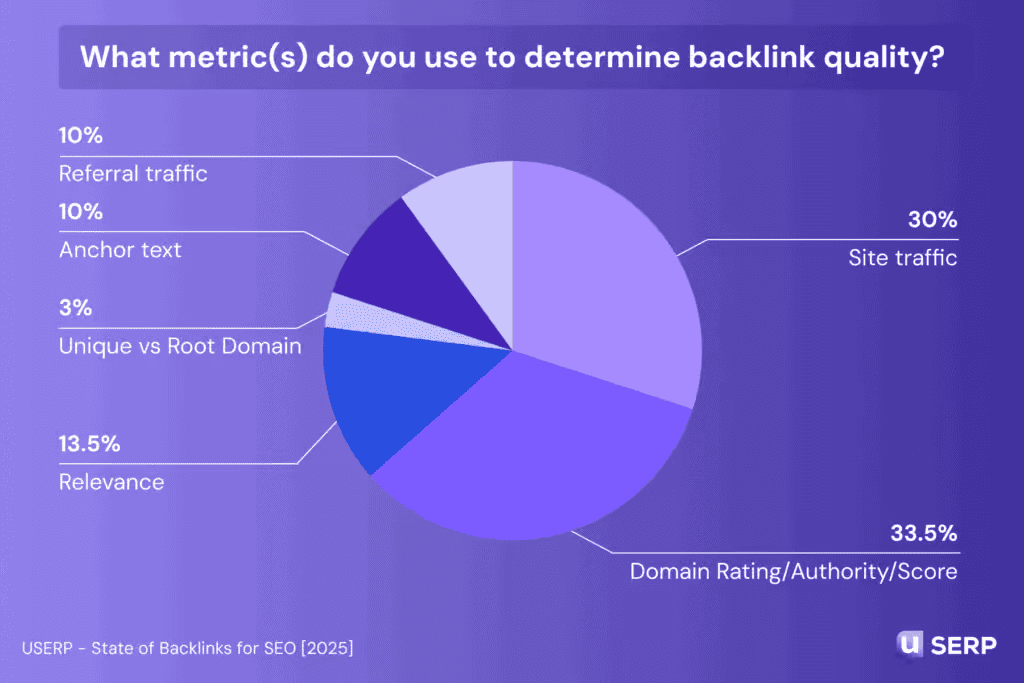
- Active link building: This is the biggest differentiator from the starter tier. At this price point, you can expect active outreach to acquire high-quality referral domains, based on factors such as Domain Rating and site traffic, to boost your domain authority.
- Monthly reporting: You should receive a custom report, likely pulled from Google Analytics and Google Search Console, detailing organic clicks, conversion improvements, and keyword rankings.
- Technical optimization: We go beyond basics here. This involves fixing XML sitemaps, adding schema markup, resolving 404 errors, and improving site performance (Core Web Vitals).
- User Experience (UX) recommendations: The agency may analyze how users interact with your pages, suggesting changes to enhance dwell time and reduce bounce rates.
Who this is for
B2B companies or e-commerce stores that have exhausted their immediate network and need to pull in leads from Google to grow revenue.
Large, premium, or enterprise SEO packages
This is where concepts like Micro-SEO Strategies℠ and high-level consulting come into play. You aren’t just buying tasks; you’re buying a strategic partner.
This level of involvement comes at a typical cost of $5,000–$10,000 per month or more. An important part of that goes to high-quality content creation and high-authority link-building, the latter of which can cost $500–$2,000 per link when paid separately (source: uSERP). With an enterprise SEO package, you’ll get:
- Content hubs and velocity: The agency will likely manage a team of content creators to publish at scale or provide detailed briefs for your internal team. This includes regular content updates to keep older articles fresh.
- Digital PR and custom outreach: Link building here is bespoke. It involves pitching journalists, getting featured in industry reports, and securing high-authority placements that smaller packages cannot afford.
- Advanced technical audits: This includes analyzing the autonomous system number (ASN) configurations, crawl budgets, and JavaScript rendering issues. It’s heavy lifting for large sites.
- Strategy builder & consultancy: You get a dedicated director. They integrate with your product and engineering teams to ensure website maintenance doesn’t break SEO.
- Data integration: They might build an internal tool or dashboard that blends your CRM data with SEO data to prove ROI down to the dollar.
Who this is for
Market leaders, large publishers, or aggressive startups with significant funding who need to dominate competitive verticals.
The three hidden costs of SEO packages
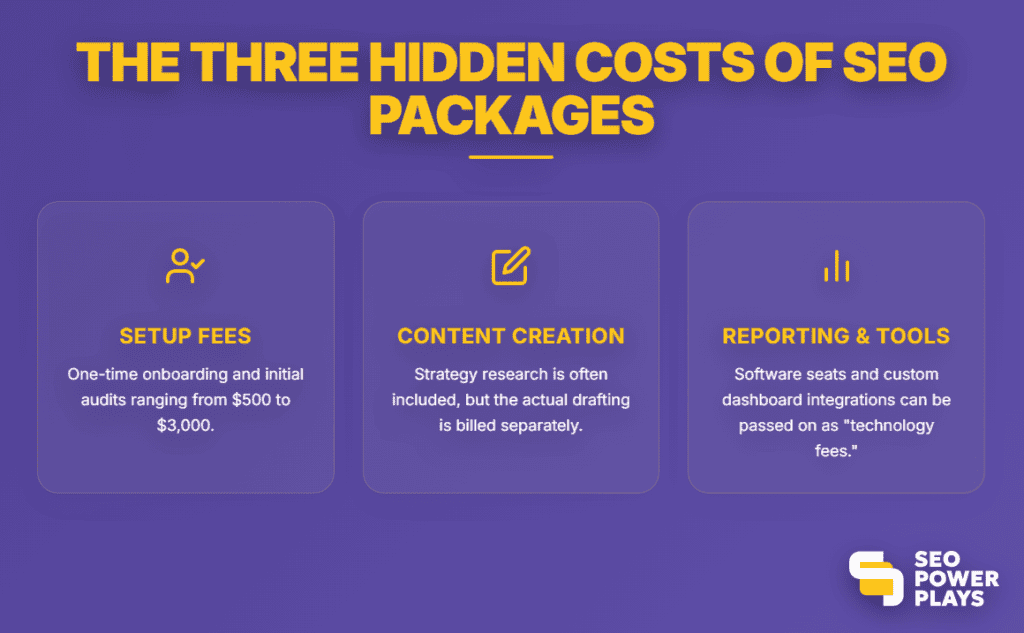
I have reviewed hundreds of agency contracts, and I often see founders surprised by invoices that exceed the retainer. Here’s the thing: SEO plans often come with caveats. To protect your budget, you need to ask about these three common “hidden” costs upfront.
(Image provided by author)
Setup fees
Agencies need time to onboard you. They have to set up project management boards, audit your current setup, and configure tracking. Many agencies charge a one-time “onboarding” or “setup” fee that can range from $500 to $3,000, depending on complexity.
This covers the initial deep-dive audit and the creation of your 6-month roadmap. While legitimate, it often catches CFOs off guard if it wasn’t explicitly discussed during the sales process.
Content creation fees
This is the most common point of friction.
A Growth Package might include “Content Strategy,” but does that mean writing the content? Often, the answer is no.
The agency might:
- Do the keyword opportunities research
- Outline the structure
- Build the brief
However, the actual writing might be billed separately or charged per word. If you don’t have internal content creators, you need to clarify if the retainer covers the actual drafting and editing of the blogs and landing pages.
Reporting and tool fees
Modern enterprise AI and SEO tools are expensive. Ahrefs, Semrush, Screaming Frog, AirOps, and specialized rank trackers cost thousands a month. Some agencies roll this into their overhead, but others pass on technology fees to the client.
Additionally, if you want a custom, real-time dashboard that integrates paid search data with organic search results, there might be a setup cost for building that view. Always ask if the monthly reporting requires you to purchase your own seats for any software.
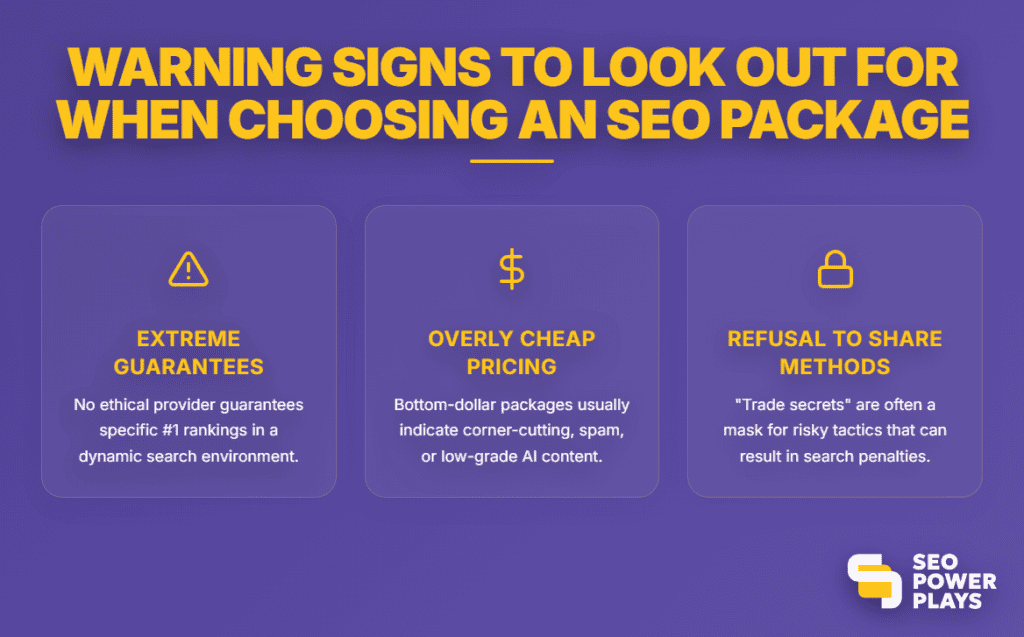
Three warning signs to look out for
The SEO industry has a low barrier to entry, which unfortunately attracts bad actors. You need to be vigilant. If you see any of these red flags during your negotiation, pause immediately.
(Image provided by author)
These usually indicate a lack of experience or, worse, predatory tactics.
Extreme guarantees
If an agency says, “We guarantee a #1 ranking in 30 days,” run. Google Search is a dynamic environment, and promising a static result is a hallmark of a scam.
Ethical agencies guarantee work delivered:
- Technical errors fixed
- Articles written
- Links built
They never guarantee specific search engine results.
Overly cheap pricing
I know budgets are tight, but you can’t get a comprehensive SEO strategy for $200 a month.
High-quality link building and expert content cost money. If the price is incredibly low, they’re likely cutting corners. This usually means they’re:
- Outsourcing to non-native speakers who don’t understand your target audience
- Using automated software to spam local directories
- Using AI to generate unedited content
Cheap SEO is often more expensive in the long run because you’ll have to pay a professional to clean up the mess and recover from penalties.
Refusal to share methods
Transparency is non-negotiable.
If you ask an agency how they build links and they say, “That’s our trade secret,” be very worried. You have a right to know if they’re doing manual outreach or buying links on spammy networks.
Ask to see a backlink update or examples of previous placements:
- If they’re hiding their off-page activities, it’s usually because those activities violate Google’s guidelines
- If they’re doing white hat work, they’ll be proud to show you
Making the safe choice
Choosing the right partner comes down to alignment. The best SEO packages aren’t the ones with the most line items. They’re the ones that solve the specific problems your business faces right now.
Prioritize communication. Start with a scope you understand, verify the ROI through clear metrics like organic clicks and conversions, and then scale up your budget as the revenue follows.
Do things right, and SEO will bring significant benefits in digital performance metrics, including (source: University of Johannesburg):
- 20%–40% improvement in click‐through rates
- 10%–25% improvement in conversion rates
- Up to a 30% increase in website traffic
- 15% increase in operational efficiency
- 25% increase in revenue growth
Do things wrong, and it’ll backfire.
If you’re ready to take control of your organic growth and stay ahead of the curve, ensure you’re armed with the right knowledge.
Subscribe to SEO Power Plays today to get actionable strategies, AI Overview updates, and pricing insights delivered straight to your inbox. Let’s build something sustainable together.