The search landscape is changing. We used to obsess over blue links and anchor text, counting every backlink. But as search engines evolve into answer engines, the rules of authority are changing. It is no longer just about who links to you. It is about who talks about you.
You might be thinking… so what is a brand mention for seo? It is the digital footprint of your reputation. As Google gets smarter, it looks for these real-world signals rather than just strings of code. Understanding this is how brands can survive in the world of AI Overviews and zero-click searches.
In this guide, we will break down how unlinked citations influence your search visibility, how to track them, and how to turn them into backlinks. This is the missing piece of your organic traffic puzzle that connects brand reputation directly to your bottom line.
Highlights
- Brand mentions are now a critical signal for search engines. These often outweigh raw backlinks in the age of AI.
- Unlinked citations help establish E-E-A-T and confirm your status as a trusted entity.
- Sentiment analysis plays a massive role in how algorithms value a mention because not all publicity is good publicity.
- You can actively turn unlinked citations into powerful link equity with the right outreach strategy.
What is a brand mention for SEO?
When we ask, “What is a brand mention for seo?” we mean any reference to your brand, product, or service on the web.
It doesn’t matter whether there is a hyperlink or not. If a journalist writes your company name in an article, that is a brand mention. If a customer reviews your product on social media, that counts too.
In the past, SEOs only cared if that mention turned into a blue, clickable link. We called them backlinks. If the text was not clickable, we called it a “missed opportunity.”
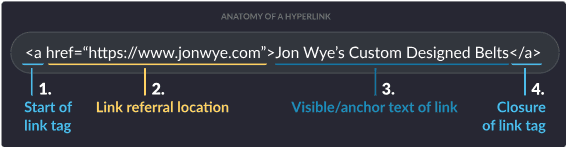
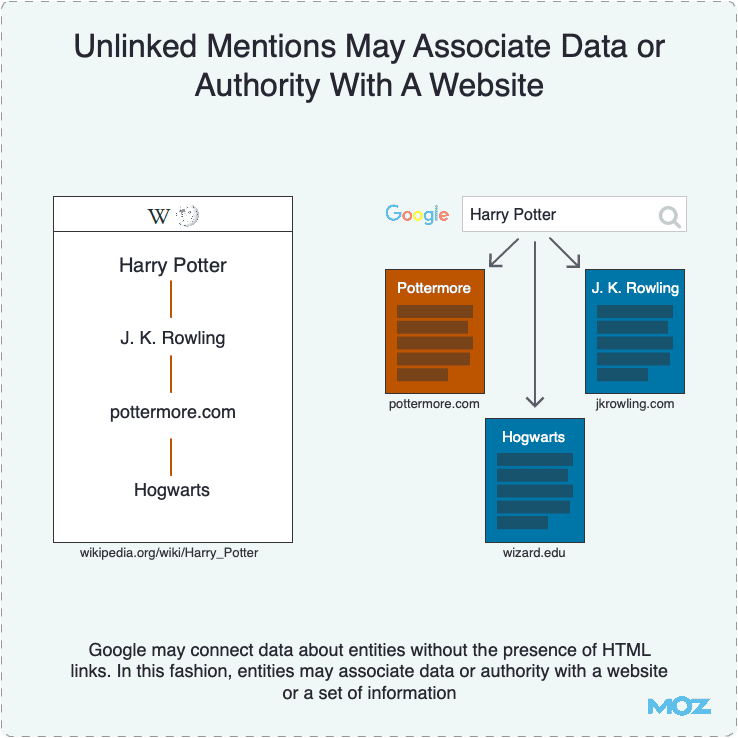
But Google changed that. They filed patents years ago describing “implied links,” meaning the algorithm can read your brand name and associate it with your website, even without the <a> tag.
Brand mentions generally fall into two categories:
- Unlinked citations: These are text-only references. While they might not pass direct link juice in the traditional sense, they act as validation signals. They tell search engines that you are a legitimate business that people are discussing.
- Linked brand mentions: These are the gold standard. They pass link equity directly and drive referral traffic.
You see unlinked citations everywhere. They appear in blogs that review your software but forget to link, news articles from publications with “no external links” policies, and forums like Reddit, where users discuss the best tools.
There are also direct vs indirect mentions. A direct mention calls out the brand, e.g., “Nike shoes.” An indirect mention is a reference to something related or implicit, e.g., “a pair of Air Jordans.”
Each time your name appears, it updates the knowledge graph and strengthens your identity.
The LLM/AI connection
AI models and LLMs don’t “crawl links” the way classic search bots do. They analyze large volumes of text and identify patterns and relationships.
When tools like ChatGPT or Perplexity answer a query, they lean on the context and how often – and in what context – people mention your brand next to ideas like “best CRM” or “top AI SEO tools dominating 2025.”
In this era, unlinked citations are crucial data points that train models. If you have thousands of backlinks from low-quality directories but no real mentions in natural conversations, AI search tools might view you as spam.
Real authority now comes from being part of the conversation. It comes from genuine user-generated content and expert citations.
This shift is why some experts say the old ways are dying. But as we know, AI grifters want you to think “SEO is dead”. The truth is that SEO is evolving to prioritize human signals.
The importance of brand mentions for SEO
You might wonder if this is all theory. It is not. The impact of brand mentions on search rank is becoming measurable and significant. Search engines now do more than simple keyword matching. They now try to understand the world as a human would.
How search engines perceive brand mentions
When Google crawls a page, it uses natural language processing (NLP) to read the words around your brand name.
If your name keeps showing up near words like “scam” or “slow,” it sends the wrong signal. When it appears near “trusted” or “innovative,” that sends a positive signal.
These signals feed into your organic rankings and play a significant role in AI Overviews, which tend to surface sources backed by trusted brands.
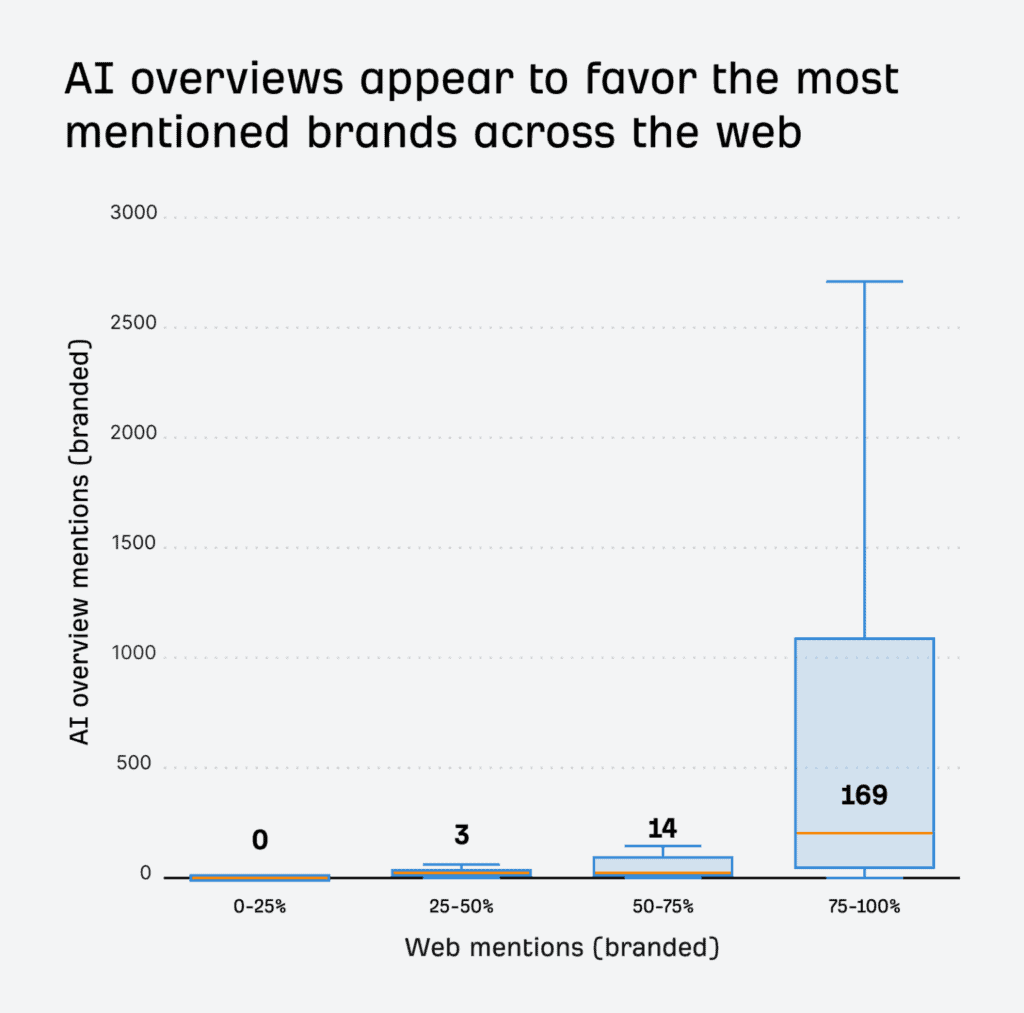
The recent Ahrefs Brand Correlation Study (2024) looked at 75,000 brands and found that branded web mentions had the strongest correlation (0.664) with appearing in AI Overviews. Mentions beat backlinks roughly 3:1 for AI Overview presence.
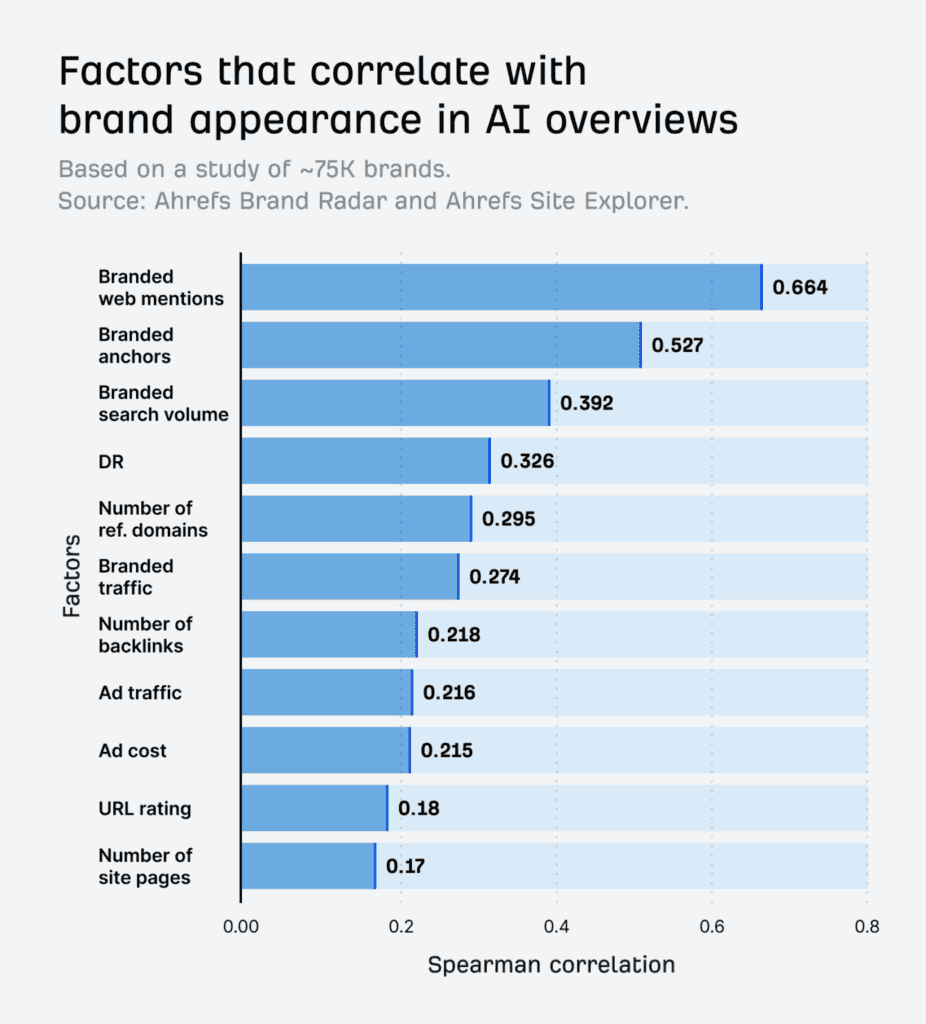
This data flips the traditional script. It suggests that, in the new age of search, being talked about is more important than just being linked to.
Building authority and credibility
Google ranks brands that show E-E-A-T: experience, expertise, authoritativeness, and trustworthiness. Brand mentions act as outside proof of that authority.
Anyone can buy a link. It’s much harder to fake real mentions from journalists, customers, or practitioners. When search engines see those organic signals, they treat your brand as more credible and less likely to be hit by sudden volatility.
These genuine authority signals (not hacks or shortcuts) are what help you ride out future algorithm updates.
Identifying and tracking brand mentions
You cannot improve what you do not measure. If brand mentions are this important, you need a system to track them. You need to know who is talking about you and where.
Tools and techniques
The days of manually searching for your name are over. You need robust social listening tools and SEO software.
Here are the primary tools to consider:
- Google Alerts: The most basic starting point because it’s free and easy to set up. You just enter your brand name and get email notifications when it appears in the index.
- Brand24 and Mention: These are advanced options that crawl the web, including blogs, forums, and news sites. They find every instance of your brand with real-time data.
- Ubersuggest and Semrush: These help spot spikes in brand visibility from product launches or press releases.
- Ahrefs Brand Radar: Excellent for tracking growth in mentions over time compared to competitors.
Other sources include Google Reviews, other review sites, and forums such as Reddit. These are direct brand mentions from your customers and are rich with sentiment and keywords. Monitoring these is vital for local SEO and general reputation management.
Sentiment analysis
Just counting mentions doesn’t cut it. Google also pays attention to the tone behind them. If most of your mentions are complaints, your brand trust starts to slip.
Tools like Brandwatch scan the language around your brand, flag sentiment, and provide a feedback loop so you can address issues before they drag down performance.
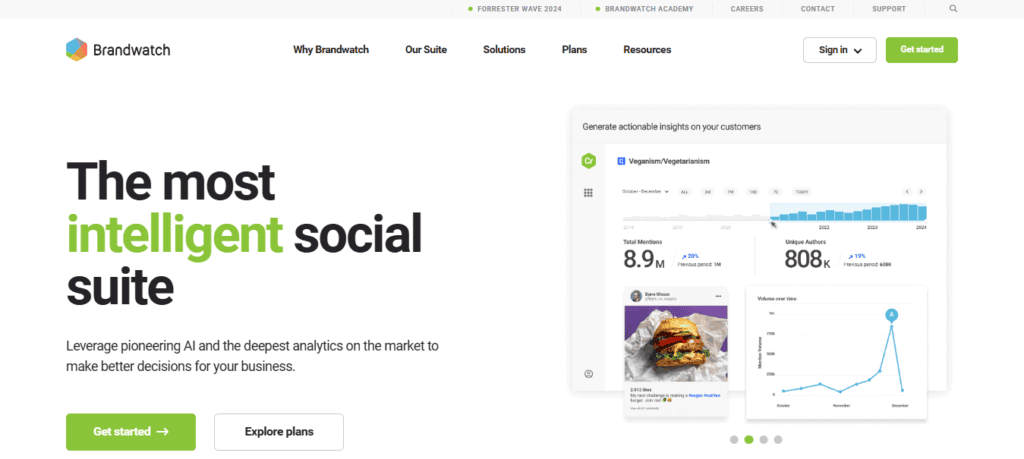
One major upside of using these tools is that they help you focus on the right metrics and avoid obsessing over the wrong ones. The last thing you want to do is waste days focusing on improving the most worthless SEO metric (i.e., plain clicks) without considering the overall financial and trust ROI.
Maximizing the power of brand mentions
Once you find these mentions, what do you do with them? You can let them sit there, or you can put them to work. There are proactive strategies to extract more value from every citation.
Link reclamation
This is the easiest opportunity for link building. Link reclamation is the process of finding unlinked citations and asking the author to add a link.
Here is the simple workflow:
- Find the mention: Use your tools to locate a recent mention without a link.
- Qualify the site: Check the site’s authority. Look for sites with DR30-60 or higher.
- Find the contact: Locate the email for the specific editor or journalist.
- Send the pitch: Thank them for the mention and gently ask if they could link to your site to help their readers find you easily.
You will not get a “yes” every time, but even a 10-20% success rate can bring in dozens of high-quality backlinks a year.
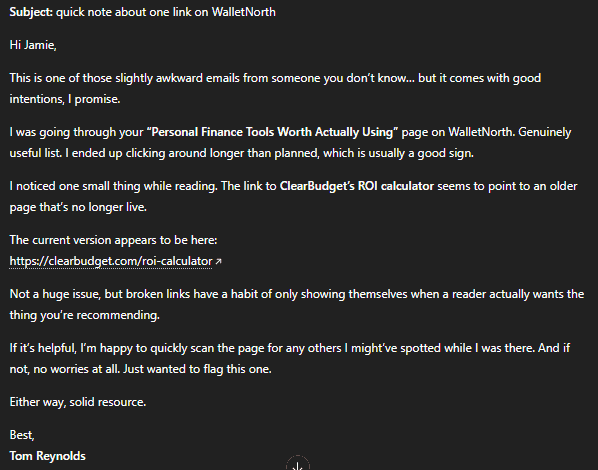
Screenshot taken by the author
Engaging with mentions
Not every mention needs to be a link to be valuable. Sometimes, engagement is the goal. If someone mentions you on social media platforms like Twitter or LinkedIn, reply.
This creates two immediate benefits:
- Builds relationships: That person might be a micro-influencer or a writer. By engaging, you turn a one-off mention into a connection that can lead to future features, guest posts, or partnerships.
- Boosts visibility: Social media platforms love engagement. The more you interact, the more people see that mention.
PR and outreach strategies
You can also use PR to drive mentions at scale. Create stories that the media wants to cover.
When you send a press release or pitch a story to a journalist, you aim for brand mentions in top-tier media outlets.
These sites often have strict policies against dofollow links, but a mention in the New York Times or Forbes is incredibly powerful for your brand signals.
Platforms like HARO (Help a Reporter Out) and Qwoted connect you with reporters looking for expert quotes. Providing a good answer earns you citations and strengthens your E-E-A-T profile.
Strategies for encouraging brand mentions
You do not have to wait for mentions to happen by accident. You can engineer content that virtually guarantees people will talk about you. This is about being “link-worthy” and “mention-worthy.”
Creating linkable content
To become a primary source that attracts citations, focus on these formats:
- Structured guides: Using clear headings and schema markup makes it easy for machines to parse your data. This increases your odds of landing in featured snippets and AI Overviews.
- Original research: Surveying 500 people in your industry makes you the primary source everyone must cite.
- Data studies: Journalists always need stats. If you provide the stat, you get the mention.
Social media strategy
Social media is the amplifier. You cannot just publish content on your blog and hope for the best. You need to push it out where the conversations are happening.
Platforms like Instagram and LinkedIn drive real traffic and brand awareness, even with nofollow links. A buzz on social often spills over into blogs and news sites, creating a cross-pollination effect where a viral thread becomes a news story the next day.
You should also look at influencer marketing. Partnering with influencers gets your brand in front of new audiences. Their mentions carry weight with their followers, acting as social proof.
Partnerships and collaborations
Another strong tactic is co-marketing. Partner with other brands in your space that are not direct competitors. You can host a joint webinar, co-author an ebook, or conduct a shared research study.
This strategy doubles your reach and leads to high-quality brand mentions on authoritative domains. This collaborative approach is a big part of the future of SEO.
Measuring the impact of brand mentions
In the past, we looked at domain authority or rankings. Those still matter, but for mentions, we need to track specific indicators:
- AI overview (AEO) visibility: Are you showing up in the snapshot? Tools like SEOmonitor are starting to track this.
- Branded search volume: An increase here is a massive signal to Google that you are gaining popularity.
- Referral traffic: Are people clicking through from these mentions?
Case study
Let’s look at a real-world example of how this works: a Hotjar case study by uSERP.
Hotjar faced a challenge: thousands of brand mentions but zero referral traffic. uSERP developed a custom outreach campaign targeting these sites. The results were impressive:
- Thousands of unlinked mentions turned into valuable backlinks.
- A 25% conversion rate on placing contextually relevant links.
- New partnerships formed for continued link building.
This proves that mentions are a goldmine waiting to be tapped.
Integration into broader strategy
You cannot treat mentions in a silo; they must support your technical SEO and link building. You need consistency to build authority over time.
This long-term view is supported by industry data. The Conductor State of SEO 2025 survey found that 63% of respondents reported that Google AI Overviews positively impacted organic traffic. The study also revealed that increasing brand awareness remained a top priority.
So, focus on building authority within your broader SEO playbook. This automatically increases your brand mentions. Then, you can focus on reclaiming them and building partnerships with journalists.
Conclusion
So, what is a brand mention for SEO in 2026?
It’s not about building links in the dark. It’s about creating an authentic reputation. It’s when you stop chasing algorithms and start building a brand they can’t ignore. From link reclamation to digital PR to niche surveys, the tools are in your hands.
The result is catapulting your visibility across social media, publications, and word of mouth from experts in your niche. In turn, this opens the floodgates to genuine backlinks that Google and AI can’t ignore.
Start tracking your mentions today and turn those unlinked citations into assets. If you want to stay ahead of SEO, subscribe to our free newsletter.