
Managing SEO for a large enterprise website is a major challenge that requires close coordination.
When you’re dealing with millions of web pages, multiple brands, or global markets, timing matters. One delay can ripple across teams. And standard tools struggle at this level. These weren’t built to handle this kind of volume or pressure.
Still, one technical mistake can cost a Fortune 1000 company millions in organic traffic.
On an enterprise scale, using the wrong tool isn’t an internal hiccup. It can impact traffic, revenue, and your competitive advantage.
This is precisely why an enterprise SEO platform becomes a vital part of your growth strategy. These systems are built specifically for scale, helping you manage the deep complexity that comes with a large business.
In this guide, you’ll learn how to choose the right platform, what actually drives ROI, and how to make a confident decision from day one. We cover a selection of criteria to help you choose the right platform for your business.
Heads up before diving in, though. This is going to require some serious strategic decision-making and investment. Choosing an enterprise SEO platform isn’t cheap because your organic traffic and reach depend on it.
Highlights
- Choosing an enterprise SEO platform is a strategic decision that affects growth, risk, and how SEO connects to revenue across the business.
- Enterprise platforms are built for scale, helping teams manage millions of pages, multiple brands, and global markets without relying on scattered tools.
- The right platform supports technical SEO, content performance, and competitive visibility while reducing manual work through automation and AI-driven insights.
- A structured evaluation process, from internal audits to vendor demos and cost analysis, helps avoid costly platform mistakes.
- The best enterprise SEO platform is the one that aligns with your workflows, goals, and long-term growth, not a generic “best overall” pick.
What are enterprise SEO platforms?
An enterprise SEO platform is built for scale. It’s not a basic tool for tracking a few keywords or fixing one-off issues. It supports large-scale search engine optimization, where small mistakes can lead to serious traffic losses.
Instead of jumping between tools, teams use one platform to manage their SEO efforts. Rankings, technical health, content performance, and visibility live in one place. This helps teams spot patterns, catch risks early, and make smarter decisions without drowning in data.
Core distinctions from standard SEO tools
The biggest difference comes down to scale and pressure. Enterprise teams work with more data, more people, and far less room for error. That changes what a tool needs to handle day to day.
- Massive scale: Enterprise sites can have millions of pages. Platforms are built to crawl and analyze them all at once.
- Multi-site visibility: Teams can monitor multiple brands, regions, and domains from a single dashboard.
- Advanced automation: AI-powered tools surface issues automatically. This means teams don’t have to chase problems page by page.
- Deeper integrations: Enterprise platforms can connect with content management systems (CMSs), analytics tools, and internal systems.
- Dedicated support: Service level agreements and account teams matter when SEO downtime is costly.
- Custom reporting: Stakeholders receive reports that align with how they measure success.
- White labeling: Enterprise tools also serve agencies and businesses that need to show branded reports.
Types of organizations that need enterprise platforms
Large companies with many brands often find these platforms essential to their day-to-day operations. They have to keep an eye on rankings and visibility for multiple products simultaneously. Doing that with small tools can quickly turn into chaos.
E-commerce sites with large catalogs are also a great fit for their complex needs. These businesses often have technical SEO issues, such as faceted navigation, that a standard tool cannot handle. This also applies to companies with complex site architectures that need a flexible platform that standard tools can’t provide.
Publishers and media companies that post a lot of content regularly also find them useful. They need to see search engine rankings change in real time to stay ahead of the news cycle.
Multi-location businesses also need these tools to manage their local presence across different regions. For a company with hundreds of storefronts, managing local pack rankings is a nightmare without a centralized tool.
Global companies with sites in different languages need help with hreflang tags to avoid confusion. If your business has a complicated site, a basic SEO platform won’t work. You need the ability to uncover deep AI-driven insights from your log data.
Investment considerations
Buying an enterprise SEO platform is a financial commitment that requires careful planning. In most cases, you can expect to pay five or six figures every year for a top-tier solution.
In fact, according to Credence Research, the enterprise SEO platform market surpassed $4 billion in 2024 and continues to grow as large businesses scale their search efforts.

Pricing usually scales with your site, so growth affects cost.
Some teams compare one enterprise platform to several smaller tools. While small tools are cheaper, they often leave your SEO data scattered in many different places. A single platform gives you one clear view of everything you need to know to make decisions.
Why enterprise organizations need specialized SEO platforms
Managing SEO for a large organization is very different from running a personal blog. You’re balancing risk, speed, and visibility across a wide digital footprint. The volume of data alone changes how SEO work gets done. It also leaves little room for manual processes.
Here’s why enterprise teams rely on specialized SEO platforms.
Scale challenges
When you have millions of web pages, you simply cannot perform manual site audits anymore. You might have thousands of domains and subdomains to monitor, which can be more difficult if you own an international site.
Managing different languages across various regions requires a process that can handle content updates for you. If you don’t use a specialized tool for this, you’ll quickly fall behind your competitors.
Organizational complexity
In a large enterprise, many different teams work on the same website. You have marketing, developers, and content creation teams all trying to hit their own goals.
This split makes collaboration very difficult without a shared platform. A good tool gives everyone the same metrics to look at, which helps your SEO tasks move much faster.
You also need reporting and analytics that the bosses can actually understand.
Compliance is another big deal because every page must follow your brand rules and the local laws. Enterprise SEO platforms let you set governance rules to stay compliant.
Technical requirements
Old systems often make it hard to change even simple SEO settings. If you use a headless CMS or a custom-built stack, you need a platform that can parse your code correctly.
You need a tool that integrates with your current tech stack. At the very least, this includes Google Search Console. But if you have a complex site architecture, you need a tool that can integrate with your custom setup and make sense of the data with your own rulesets.
Security is also a top priority for big businesses that handle sensitive data.
If you’re currently planning a website redesign SEO project, you need a tool that can handle the move. You don’t want to lose your hard-earned traffic. Custom automation helps your SEO teams work much better with your developers.
Business imperatives
Companies want proof that spending drives results. It’s not enough to show rankings. Teams need to connect organic traffic to revenue, leads, and growth. That’s how they can show true ROI.
Research supports this. Conductor’s 2025 State of SEO Survey reveals that 91% of professionals said SEO supported their goals in 2024. The strongest results came from teams using an integrated enterprise SEO software.
A good platform helps you find market gaps before competitors have a chance to react. This lets you focus your SEO strategy on the tasks that really move the needle for the company. It also lets you optimize resources and people for maximum efficiency. That’s competitive advantage at scale.
Strategic value
Making choices based on real-time data is the only way to win at enterprise SEO. You need AI-driven insights to see what’s coming next in your industry. This helps you plan ahead for new markets or major holiday rushes.
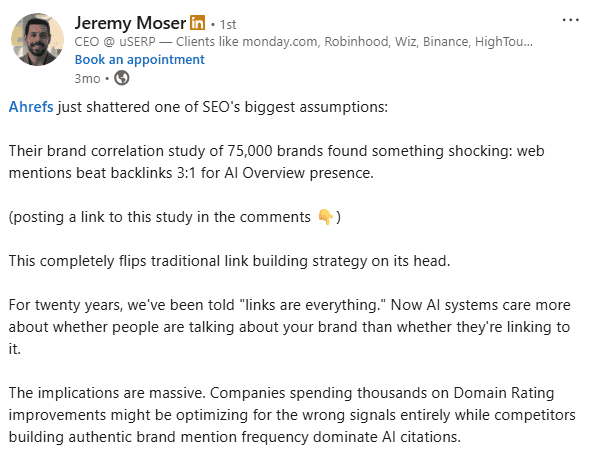
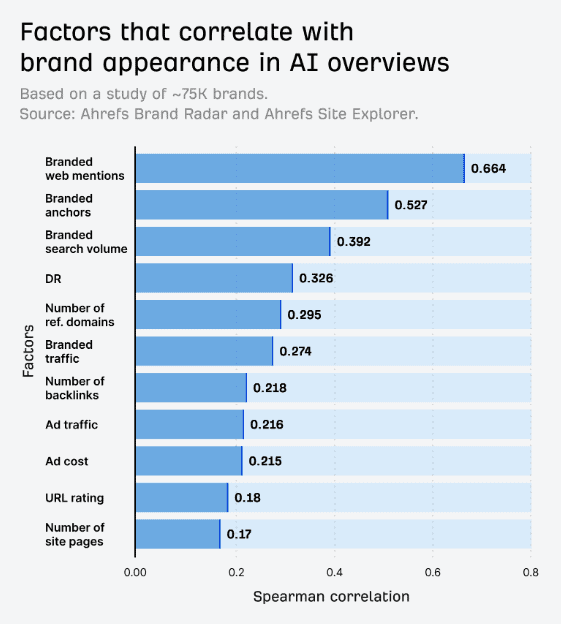
Jeremy Moser, founder of uSERP, has noted that brand mentions are becoming a stronger signal of AI visibility than links alone. This is why it’s important to keep a close eye on your brand mentions in SEO (which also keeps your brand reputation safe online).
Your tool should warn you immediately if something goes wrong, so you can fix it before it affects your bottom line.
Essential features of enterprise SEO platforms
To get a good return on your investment, you need the right set of features. These tools should help you reach your main business goals every single day.
Technical SEO at scale
Technical SEO becomes harder as sites grow. Issues multiply quickly, and small problems can affect many pages. At this level, your software needs to spot problems early and help teams act with confidence.
Advanced site crawling
Your site crawler should handle very large sites without missing key sections or grinding to a halt. It should be able to render JavaScript and dig into log data as well.
That kind of visibility makes it easier to see how Google actually crawls your site, which matters for indexing and long-term stability.
Technical issue detection
The tool should be smart enough to find technical errors on its own. It should also tell you which ones are most important for your rankings so you can prioritize your work.
Site speed monitoring
Site speed is considered a ranking factor in modern search results.
Your SEO platform should track Core Web Vitals for every page and compare your speed to your top competitors. This allows teams to see which areas they need to review to improve speed.
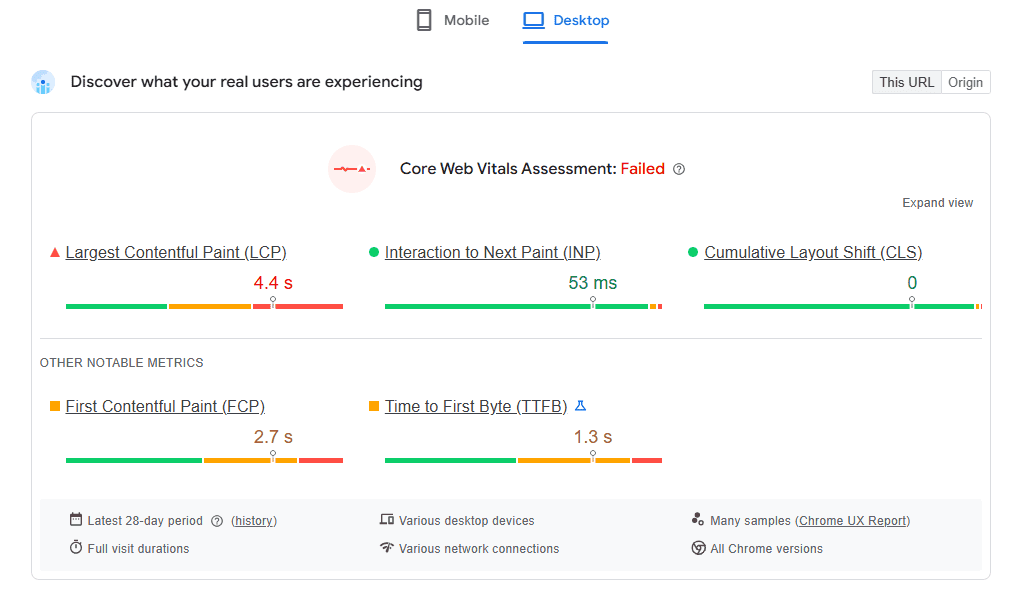
Screenshot provided by the author
Architecture analysis
Site structure shapes how both search engines and people find their way around your content.
Seeing your site laid out clearly makes it easier to spot weak internal links and pages that rarely get discovered. Fixing those gaps can improve visibility quickly without publishing anything new.
Mobile and international
Mobile-first indexing makes mobile performance an important part of your SEO strategy. In April–June of 2025, more than 60% of global web traffic came from mobile devices, according to Statista.
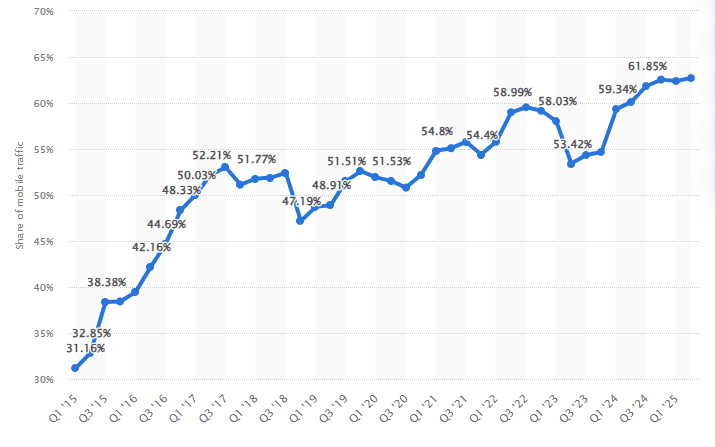
Platforms should test pages across devices and flag mobile-specific issues. For global sites, strong hreflang support prevents duplication and ensures the right pages rank in the right markets.
Content intelligence and optimization
At the enterprise level, content decisions need data to back them up. A strong platform helps you see what’s working, what’s missing, and where to focus next.
Content gap analysis
You need to know exactly what your competitors are writing about that you missed.
Content gap analysis highlights missed topics and keyword opportunities that already show demand. SEO platforms can scan thousands of competitors at once, saving weeks of manual research.
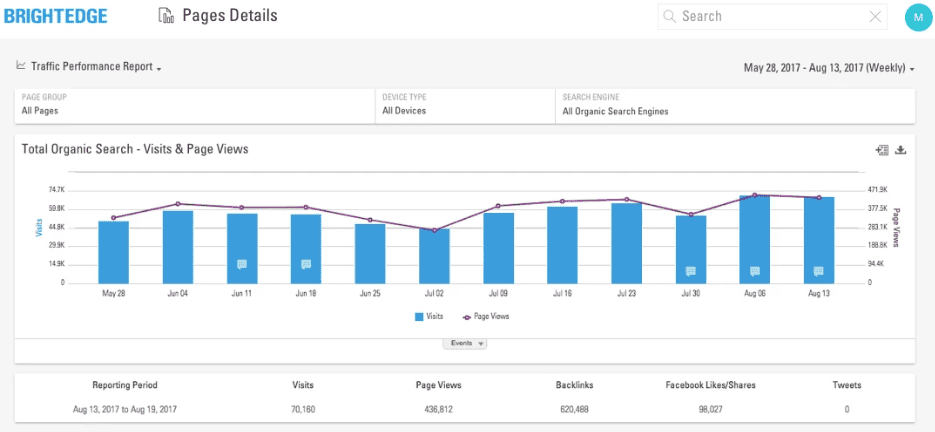
Content performance tracking
It’s not enough to just post content. You need to see which content types and topics are driving traffic, leads, and revenue.
Performance tracking connects content to real outcomes, so effort goes toward pages that actually support business growth.
On-page optimization
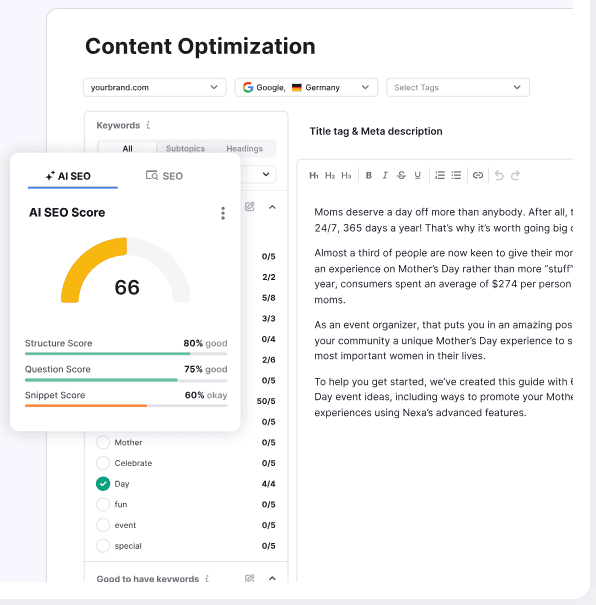
AI SEO content curation tools support writers while the content is still in progress.
Instead of fixing issues later, teams get guidance on structure, keyword usage, and meta descriptions as they write. That speeds up publishing and reduces rework.
Content planning
Enterprise SEO requires structure. Tools help teams plan related topics that build authority over time. They also integrate with content calendars.
This keeps AI content optimization aligned with broader business goals instead of chasing isolated keywords.
Quality scoring
Automated quality scoring flags thin or outdated content based on user value signals. This makes it easier to decide what to improve or remove.
Keyword research and competitive intelligence
For enterprise companies, keyword research helps you understand where demand is going, how crowded a space is, and which opportunities are worth the effort.
Enterprise keyword database
Enterprise teams need access to large keyword sets.
A robust database provides accurate search volume, difficulty, and trends for millions of terms. This helps teams prioritize realistically instead of chasing keywords they can’t win.
Competitor tracking
Seeing how your visibility compares to others is important for staying competitive. The tool should show you what your rivals are doing with their content and links week over week. And where rivals are gaining ground.
It should also reveal which content and link strategies are driving their growth, so teams can respond faster.
Search intent analysis
Search volume only shows part of the picture.
Intent analysis looks at why someone is searching and what they hope to find. That understanding helps teams build pages that meet real needs. Not pages that simply repeat keywords.
Forecast modeling
Enterprise SEO requires forward planning. Forecasting tools estimate future traffic and revenue based on changes in ranking and opportunities. This makes it easier to justify resources and secure a budget for high-impact SEO initiatives.
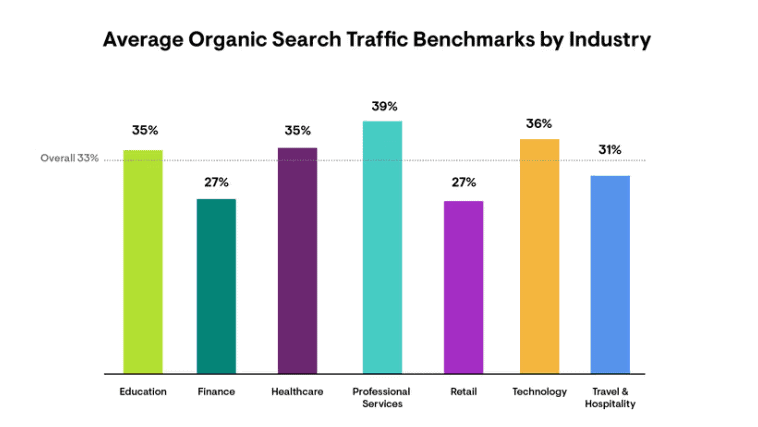
Conductor’s 2024 Benchmarks Report showed that organic search accounted for one-third of total website traffic across enterprise sites, making accurate forecasting hard to ignore.
Market research
Your new platform should help you see new categories and trends before they become mainstream. This includes finding new search terms that are just starting to gain popularity.
Rank tracking and visibility
Rankings tell a story over time. What matters is how visibility shifts across regions, products, and competitors. Watching numbers move isn’t the goal here. Understanding why they move is what helps teams make better decisions.
Large-scale rank monitoring
You need to track thousands of keywords across cities and countries. This is very helpful for businesses that have physical locations or regional monitoring.
Broad monitoring helps teams spot local drops early and maintain visibility before they impact traffic.
SERP feature tracking
Ranking is now about much more than just being in the top ten search results. AI Overviews, featured snippets, and other SERP features like local packs and knowledge panels shape how users discover brands.
Tracking these elements shows where your content appears and where competitors are taking space you once owned.
Share of voice
Share of voice goes beyond individual rankings. It shows how often your brand appears in search results compared to competitors across a full set of keywords.
Tracking this over time makes it easier to spot real momentum, whether you’re gaining visibility or quietly falling behind without noticing.
Custom segments
Custom segments let teams focus on what matters to them. Performance can be viewed by product, region, or business unit rather than through a single generic report.
This keeps stakeholders engaged. It also helps teams move faster without digging through irrelevant data.
Historical data
Short-term ranking changes can be misleading. Historical data shows how visibility shifts over time.
When platforms keep SEO data accessible long term, teams can see what worked, spot trends, and make smarter decisions based on evidence.
Link intelligence and authority building
Links still play an important role in search. But managing them at scale is where things get tricky.
Enterprise teams need visibility, context, and control. A good platform helps teams understand which links matter, which ones don’t, and where to focus next.
Backlink analysis at scale
Enterprise sites attract links constantly. Often, without teams noticing.
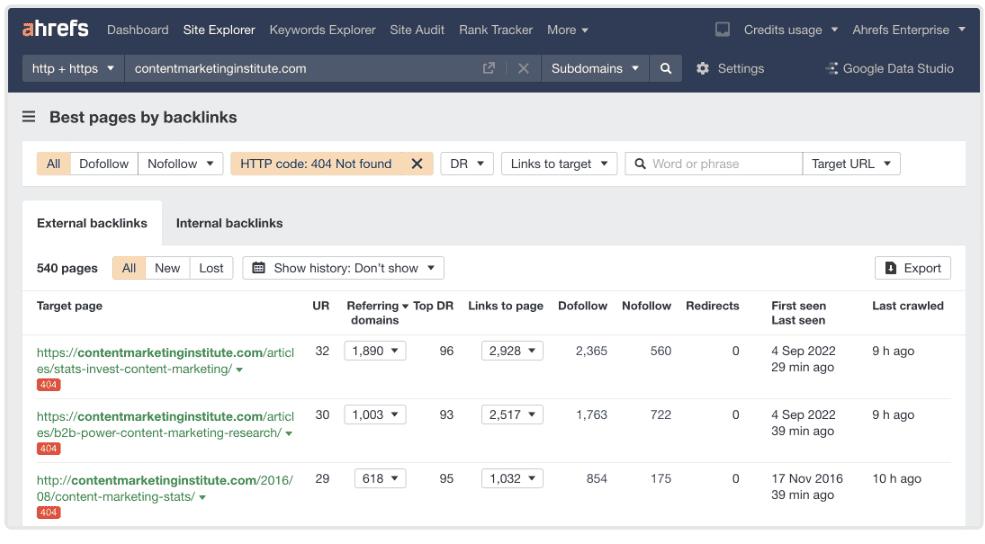
Backlink analysis shows where links come from, how they affect authority, and how your profile compares to competitors. That clarity helps teams protect credibility and avoid blind spots as link volume grows.
Link opportunity discovery
Finding good places to get new links is key to scaling organic growth. Platforms help surface real opportunities based on relevance and visibility.
This is where digital PR link building becomes valuable. High-quality mentions from trusted publications often move the needle more than volume alone.
Competitive link analysis
Competitor link data provides useful shortcuts. Seeing where competitors earn mentions reveals patterns you can act on.
It also highlights coverage gaps, helping teams focus outreach on sources that already influence rankings in their space.
Link risk assessment
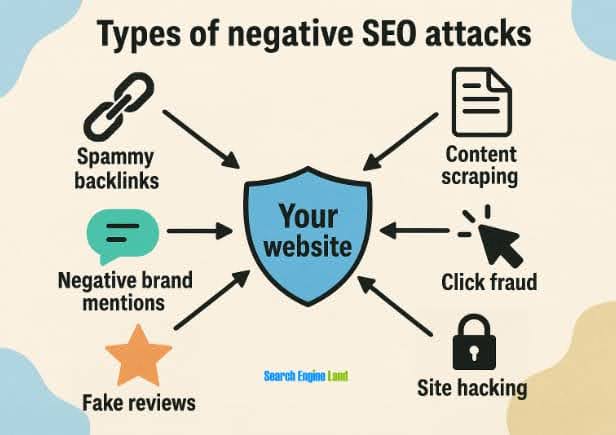
Not all links help. Spammy, low-quality, or unnatural links can quietly drag performance down. A good platform flags risky patterns early. This gives teams time to respond before issues escalate or penalties arise.
Disavow management
When harmful links appear, cleanup needs to be fast and controlled. Platforms simplify disavow management by keeping records organized and easy to update. That matters most when sites face negative SEO or sudden spikes in low-quality links.
Workflow and collaboration
SEO work only delivers results when it’s implemented. For large teams, that’s often the hardest part. A strong tool keeps work moving by giving teams clear ownership, visibility, and fewer points of friction.
Task management
Assigning work to your team should be a simple process within the tool.
Team members need to see what’s in progress, what’s blocked, and what’s finished. Real-time visibility helps prevent delays and keeps priorities clear as work moves across teams.
Approval workflows
Big companies often have many steps for getting things approved. The platform should support these steps for both content and technical changes.
Role-based permissions
You need to control who can change things in the tool to avoid mistakes. This keeps your site safe while allowing everyone to do their jobs.
Most enterprise tools let you set control access by team and responsibilities, so you can quickly assign and update role groups.
Integration hub
Using project management tools like Jira makes it much easier to collaborate with your developers. This ensures your collaboration stays smooth and productive.
Communication tools
Being able to leave comments directly in the tool is a huge help for busy teams. It keeps everyone on the same page and cuts down on long email threads. Even when priorities change quickly.
Reporting and analytics
Reporting isn’t just about numbers. It involves showing progress, risk, and impact in a way that supports better decisions.
Here’s what reporting and analytics include.
Custom dashboards
Not everyone looks at SEO the same way. Executives want a quick view of performance, while SEO teams need detail.
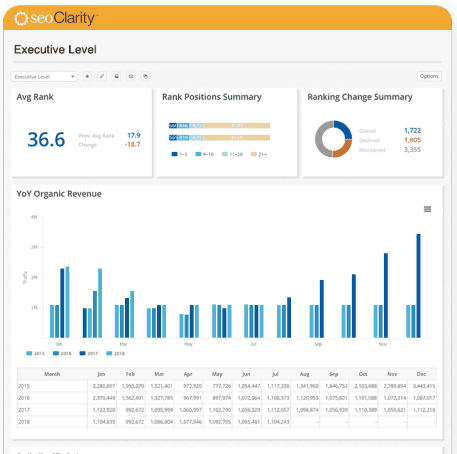
Custom dashboards let each group see what matters to them. This means team members don’t have to dig through reports they don’t need.
Automated reporting
Sending out monthly reports should be an automatic process. This keeps everyone updated on your search performance without extra work for you.
Data visualization
Good visuals make complex data easier to understand. Clear charts and trends help teams explain results, spot patterns, and show impact. They also make SEO work more accessible to teams outside marketing.
ROI tracking
Your team needs to show how search contributes to revenue, leads, or conversions. Clear ROI tracking helps protect budgets and supports smarter investment decisions.
API access
Larger organizations often push SEO data into internal systems. Strong API access enables this by connecting to data warehouses and BI tools. It gives teams flexibility to connect SEO insights with broader business data and reporting tools.
Integration ecosystem
For enterprise SEO companies, platforms need to fit into an existing stack without creating extra work. Integrations help teams move faster and keep SEO connected to the rest of the business.
CMS integration
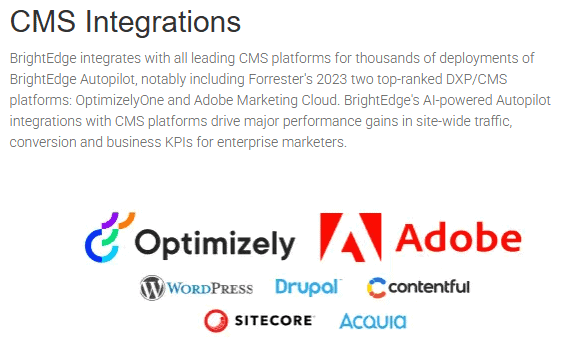
SEO work moves more quickly when platforms connect directly to your CMS. Integrations with WordPress, for example, make updates easier and reduce manual steps during publishing.
Analytics platforms
SEO data needs context. Connecting with analytics platforms like Google Analytics and Adobe Analytics shows how search traffic behaves after it lands. That insight helps teams understand engagement, not just rankings.
Marketing automation
Integrations with tools like HubSpot, Marketo, or Salesforce help track how organic traffic turns into leads and revenue. This is key to understanding real impact.
Tag management
Managing your tracking scripts with Google Tag Manager should be built into the platform. This saves your tech team from extra work.
Data warehouses
More teams are moving SEO data into data warehouses. Connections to platforms like BigQuery or Snowflake allow deeper analysis and long-term storage alongside other business data.
Custom APIs
When a platform doesn’t offer a native integration, custom APIs give teams flexibility. This option ensures SEO data can still connect to internal tools and workflows.
Key features that drive ROI
An enterprise platform is only worth the money if it actually helps you grow. This doesn’t come from having more features. It comes from using the right ones to save time, reduce risk, and push growth where it counts.
Automation and efficiency
Automation removes repetitive work and frees teams to focus on strategy. When tools handle monitoring and routine checks, experts spend time on decisions that actually move performance. This could save 60–80% of the time spent on manual work.
That shift reduces operating costs and lets SEO scale without growing headcount at the same pace.
Investing in these tools early also helps your staff get ready for the future of SEO and new AI-driven search technologies.
ROI metric to monitor: Cost savings from efficiency gains
Predictive analytics
Predictive analytics help teams estimate impact before committing resources. Even better, analytics and heuristics let you spot opportunities before your competitors do.
This means teams can model traffic and revenue outcomes in advance. This keeps effort focused on work with real upside and protects budgets from being spent on low-return initiatives.
ROI metric to monitor: Revenue from captured opportunities
Cross-team alignment
Efficiency isn’t just dependent on software, but on the people using it. Making changes faster is a great way to increase your monthly ROI.
When your developers and marketers work well together, you see results much sooner. A platform that helps with the validation process for technical fixes is very valuable.
ROI metric to monitor: Faster time-to-value
Data-driven decision making
Don’t ever guess what your next move should be. Every choice you make should be based on hard data from your platform.
This helps you spend your marketing money in the right places and allocate resources for the best return on investment. It also helps you prove value and effort to your executive leadership.
You can also learn from top SEOs on AI to see how they use data to win.
ROI metric to monitor: Improved conversion of SEO investment
Competitive advantage
Getting real-time info on your competitors helps you see precisely where they are weak. If a competitor drops in the rankings, you should be ready to take their spot.
This proactive approach helps you gain more market share over time. It ensures you’re the one setting the pace in your industry by watching trends instead of just reacting to others.
ROI metric to monitor: Market share gains
Risk mitigation
Finding technical and common SEO issues early can save you from losing a massive amount of traffic. You also need to stay ready for when Google changes its ranking rules.
Watching the impact of AI on SEO is another way to keep your brand’s presence safe. Protecting your site from updates is just as important as growing it.
ROI metric to monitor: Prevented traffic/revenue loss
How to choose the right enterprise SEO platform
Picking a platform is a big step that will last for several years. You need a good plan to make sure you pick the right one for your needs.
Here are five phases you should consider implementing.
Phase 1: Internal assessment (Discovery)
Before you look at any tools, look at your own company first. You need to know exactly what you’re trying to achieve with your search goals.
You might need to perform a full enterprise SEO audit to see where you stand. This helps you find your biggest problems before you spend any money.
Here’s how to start your discovery:
- Review your tools: Write down every tool you use right now. Find the gaps that an enterprise SEO platform could fill for your team.
- Look at your team: Think about who’ll actually use the tool every day. If you need to learn SEO basics first, make sure to plan for extra training and support.
- Set your goals: What does success look like for your company? Pick the metrics that matter most to your business and track them from day one.
- Determine acceptance criteria: What’s your budget and approval process?
Phase 2: Requirements definition
Once you understand your needs, it’s time to define what the platform will support. This step keeps demos focused and prevents feature overload later.
Must-have capabilities
Make a clear list of things the tool must do for your team. This might include, for instance, tracking a certain number of pages or keywords.
If you have five million pages, a tool that only handles one million won’t work for you. Always plan for your future growth, including your team size.
Next, list the critical integrations you need and how the reports should look. If there are any fields or data you need in those reports, list these too.
Nice-to-have features
These are things that would be good to have, but aren’t a priority right now. Think about what you might need next year to stay ahead.
For example, will you want AI-powered tools to help you write more content? It’s good to have these on your radar during the search.
Technical requirements
Security and compliance are very important for enterprise-level organizations that value their data. Make sure the platform has a secure connection and follows all local privacy laws.
List down all your API requirements. Are there any specific tools you need integration with?
Then consider the implementation complexity. How easy is it to set up and integrate with your existing tools? Do you need to build any “man-in-the-middle” tools that parse or manipulate data so the enterprise SEO platform works seamlessly?
Phase 3: Vendor evaluation
Choose three to five platforms to look at more closely. Request detailed demos using your own site’s actual data.
Ask about how long implementation takes and what kind of resources they need from your side in order to do this. If you’re setting it up completely on your own (unlikely), ask if they can support you so you can get the platform up and running faster.
This is the only way to see if the tool can really handle your site’s scale.
Ask what kind of support they offer and read case studies from other big businesses to see how they handled the transition. Seeing real-world results will help you feel more confident in your final choice.
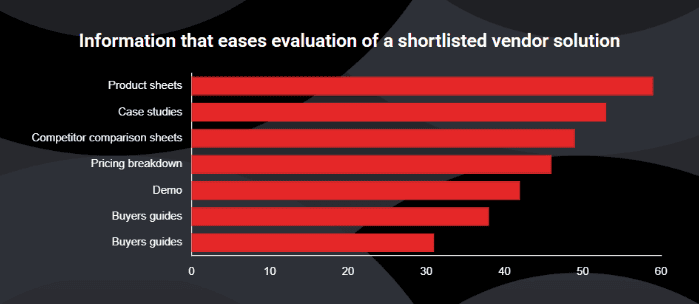
In fact, research from The Insight Collective shows that 53% of decision-makers prioritize case studies when comparing vendors.
Review the contract terms. Are they flexible enough and fair for your company? Is there a reasonable termination process? What’s the platform’s guaranteed uptime, and what are the support SLAs?
Finally, assess the vendor stability. Look at their public roadmap to see if this aligns with the future of SEO and organic traffic for your company.
Phase 4: Total cost analysis
Cost goes beyond the license fee. Understanding the full picture prevents surprises later.
Direct costs
This is the price you pay for the tool every year. Don’t forget to include the costs for training your team to use it well.
Some tools might charge extra for onboarding, better support, or more data. It’s important to see the full price before you sign any contracts.
Indirect costs
Think about how much time your internal team will spend on the initial setup. Moving to a new tool takes a lot of effort from everyone involved.
You might also need to use your API access to build your own custom connections. These hours add up quickly for a large team.
Don’t forget any ongoing maintenance. This is more frequent if you have a custom setup or use legacy tools.
Expected ROI timeline
Enterprise platforms rarely pay off overnight. A three-year view is more realistic and sets the right expectations. Create a break-even analysis based on your setup, teams, and workload of other projects.
This window gives teams time to adopt the tool, refine workflows, and see measurable returns across the business.
Phase 5: Pilot and rollout planning
Try the tool first if you can get a trial. Set very clear goals for what you want to achieve during the trial period.
Don’t try to turn everything on at once. Instead, move in small steps to avoid overwhelming your team. This gives everyone time to learn how to use the new features properly and see success early. Don’t forget to set up a training schedule that’s flexible enough to be efficient without delaying any critical ongoing projects.
Finally, create a change management plan and set up a governance structure.
Common enterprise SEO platform selection mistakes
Many companies make the same mistakes when picking an SEO platform. If you watch out for these, you can save your company a lot of money and time.
- Overemphasis on features: It’s easy to be impressed by long feature lists. But features only matter if teams actually use them. When tools are bought for what they can do instead of what they will do, ROI can fade quickly.
- Underestimating implementation: Setting up a new enterprise platform is a big job and needs a realistic timeline. It takes more than just logging in for the first time. Plus, if you don’t plan enough for training, you’ll run into trouble.
- Ignoring scalability: A platform that fits your business today can become a problem tomorrow. Page counts grow, markets expand, and data needs increase. Choosing a tool without thinking ahead often leads to painful migrations or costly workarounds later. Learn about a platform’s limitations before you sign the contract, not later on.
- Poor stakeholder alignment: If your developers don’t like the tool, they won’t help you fix things. Get everyone involved early to ensure full buy-in from end users and executives.
- Price-only decision-making: Lower cost doesn’t always mean better value. Cheap tools can lack depth, support, or flexibility. When growth stalls or reporting falls short, teams end up paying more in lost opportunity than they saved upfront. This is what happens when you ignore the total cost of ownership and think short-term about long-term investments.
- Vendor lock-in risks: Check the rules for leaving before you sign. Can you keep all your SEO data if you switch later? Some tools make it very hard to move your data.
- Insufficient change management: People often don’t like change in their daily work. If your team is used to their old way of working, they might resist a new platform. You need a plan to help them switch over. Inadequate training or the absence of a project owner can make this feel unimportant, increasing resistance to change.
Leading enterprise SEO platforms overview
There’s no single “best” platform. The market is competitive, and each solution is built with different priorities in mind. What works well for one organization may not work for another.
Here are six enterprise SEO software tools you may want to check out. Make sure to evaluate your options based on your own workflows and priorities. The right choice depends on how your organization approaches its SEO, not on generic rankings.
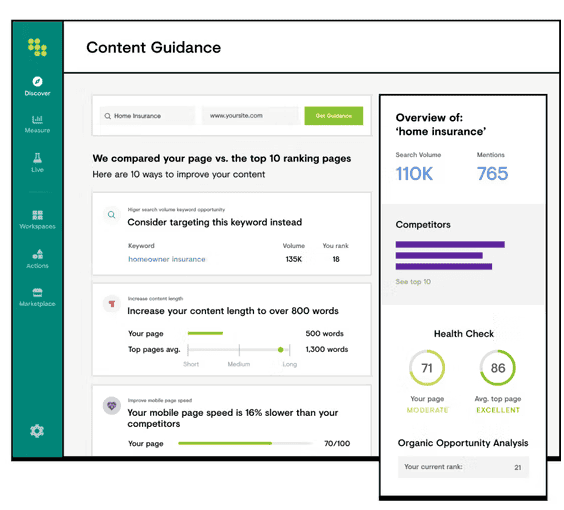
1. Conductor
Conductor focuses heavily on content performance and team collaboration. It’s often used by organizations that want clearer insight into audience intent and stronger alignment between SEO, content, and stakeholders across departments.
2. BrightEdge
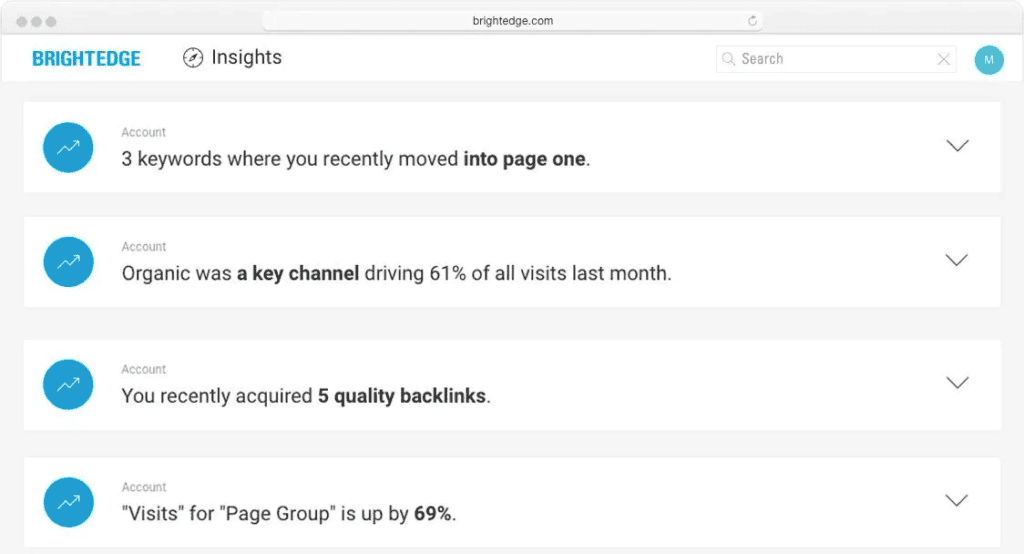
BrightEdge is one of the oldest in the business. It’s known for large-scale data coverage and predictive insights that help teams connect SEO performance to business outcomes over time.
3. seoClarity
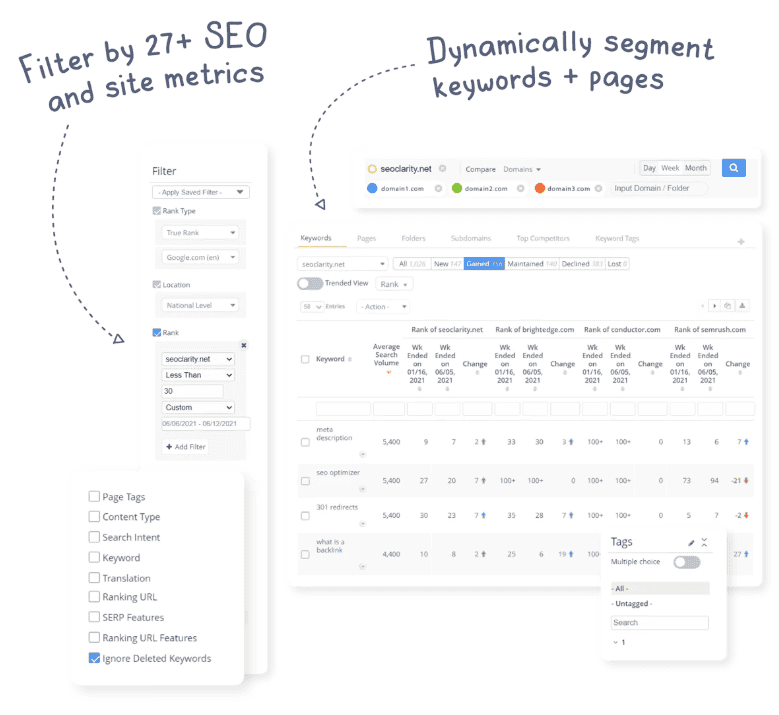
seoClarity is known for being very flexible for its users. It offers a high level of customization. This makes it easier to tailor dashboards, workflows, and reporting to specific internal needs.
4. Botify
Botify is a good option if your team specializes mostly in technical SEO. You may use it if you have complex architectures. The tool can help uncover indexing issues.
5. DeepCrawl (Lumar)
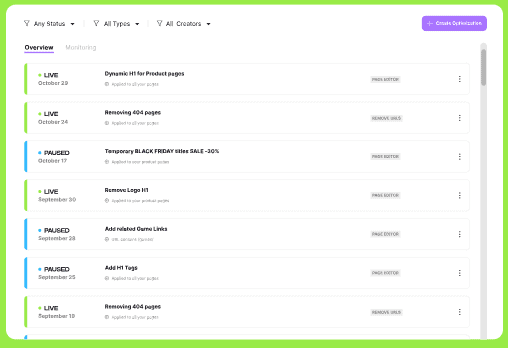
Lumar specializes in technical monitoring and issue detection. Teams that prioritize site health and fast identification of complex technical problems often use it to maintain stability across large websites.
6. Semrush Enterprise
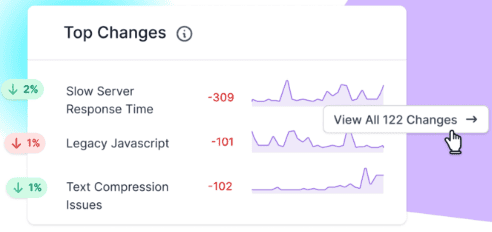
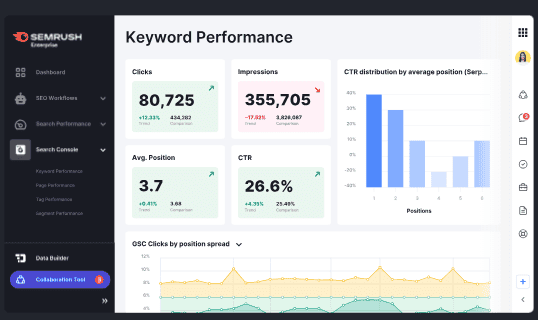
Semrush Enterprise extends a familiar interface into enterprise-scale use cases. This makes it easier to manage keyword research, competitor insights, and reporting across big sites.
Many organizations value it for usability, especially when multiple teams need access without heavy onboarding.
Emerging trends
Search is changing faster than most teams planned for. AI and machine learning aren’t “nice-to-have” experiments anymore. They now sit inside enterprise SEO tools, shaping which insights you see, what work gets pushed to the top of the list, and how much manual effort you can cut as search behavior keeps shifting.
Content sits right in the middle of that change. Platforms now lean harder on content intelligence to show what actually resonates, what’s missing, and which assets need a tune-up. AI tools help with planning and optimization without removing human judgment from the loop.
Automation has also grown. Instead of one-off scripts you forget about, platforms can now keep an eye on your site 24/7, monitor changes, run technical checks, and send alerts. Tighter CMS integrations make it much easier to act on those insights, especially for teams that ship updates frequently.
Predictive analytics is the glue that holds it together. Rather than reacting after traffic falls off a cliff, more platforms forecast risk and opportunity ahead of time.
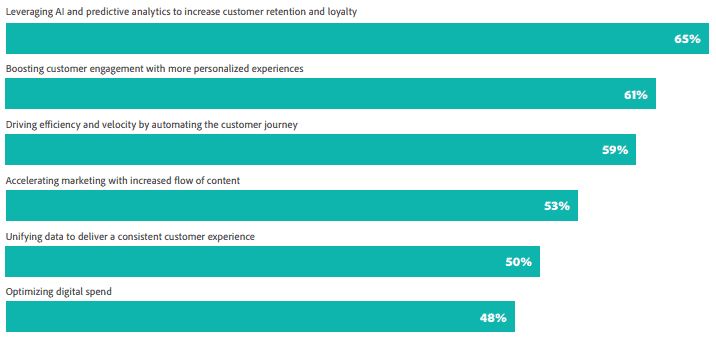
According to Adobe’s 2025 AI and Digital Trends Report, 65% of senior executives see AI and predictive analytics as major growth drivers. That mindset is exactly why these features now come baked into modern SEO platforms.
Conclusion
Choosing an enterprise SEO platform is a strategic investment. The right tool supports how your business grows, how teams work together, and how SEO ties back to revenue.
A careful evaluation process helps you choose a platform that fits your goals and workflows. It should also adapt as your organization expands into new markets and search keeps changing.
The right platform should not stagnate. It should evolve with you. Think long-term about how you envision your company changing and how the ideal platform should help support your teams and growth.
To learn more about SEO tools, tactics, and strategies, make sure to subscribe to SEO Power Plays. You’ll receive insights that’ll help you make smarter decisions to grow your business.