Link building is an essential part of search engine optimization that goes beyond on-page tweaks. But let’s face it: It’s not easy. It’s expensive, takes forever, and is incredibly risky if you do it wrong. Still, authentic backlinks remain a core ranking factor you can’t ignore.
Most business owners and SEO agencies don’t have the time to handle manual outreach or content creation at scale. So they have to turn to monthly link building packages to get the job done.
But the marketplace is a minefield. You’ll run into everything from elite white hat link building to shady link farms that invite Google penalties like catching rabies playing with wild dogs.
Choosing the right option means winning a steady organic traffic growth. The wrong path can sink your search performance for months and even affect your domain reputation.
In this guide, we cut through the noise to show you real pricing and quality standards for 2026. Save it, and you’ll know how to choose your SEO link building package in the age of AI search.
Here is how to find a partner that actually moves the needle for your bottom line.
Highlights
- Link building packages usually come in three types: volume-based, resource-based, or custom project-based plans.
- Pricing for a single high-quality editorial link can range from $500 to over $2,000, depending on site authority.
- Good white-hat providers use manual link building and digital PR instead of simple automated guest posting.
- In 2026, search engines care more about content quality and niche relevance than just domain rating scores.
- It is vital to avoid black hat link building and toxic backlinks to keep your website safe.
Understanding package models and metrics
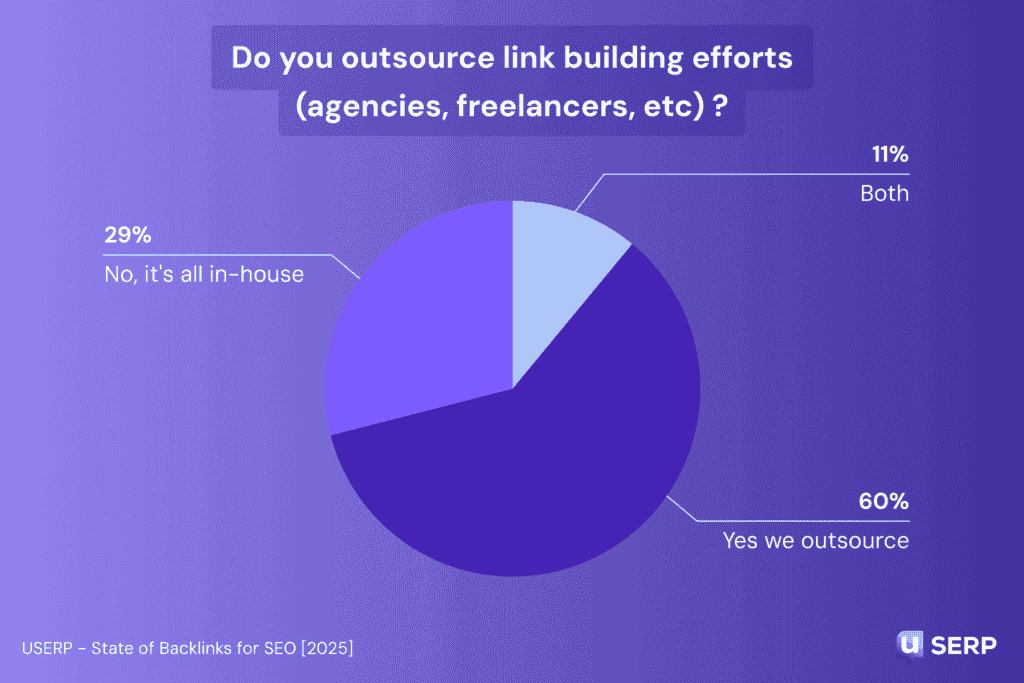
uSERP’s State of Backlink’s Report for 2025 shows that 60% of SEO professionals outsource their link building. Another 11% combine in-house efforts with outsourcing.
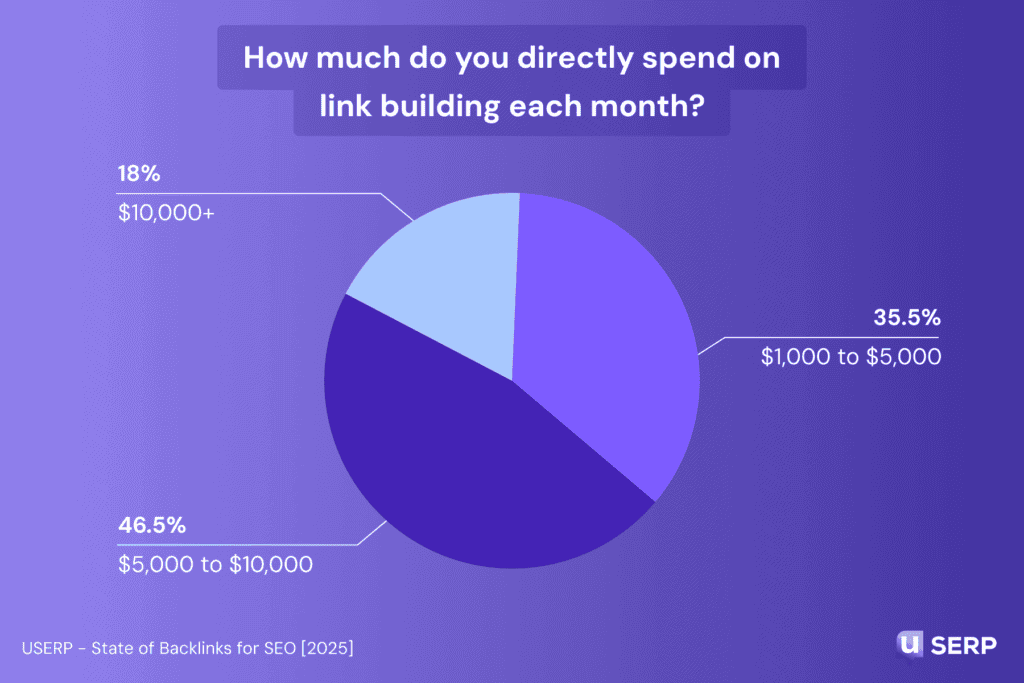
That same report also discovered that 64.5% of SEOs spend over $5,000 per month on link building.
It’s clear that link building strategy is an integral part of SEO and content strategy.
But not all link building services work the same well or offer the same kind of package. Before spending your marketing budget, you need to compare your options with standard packages.
By doing this, you’ll know precisely the type of quality and results you can expect.
As you compare, keep in mind that these standard packages are not exhaustive.
For example, if you have a local business, you might need an agency that not only provides link building but also uses the best local SEO tools to reach people in your area. Having the right tools makes a big difference in how you track your local growth and visibility over time.
The three main package models
The main link building package models are: volume-based, resource-based, and custom.
Volume
Volume-based models promise a specific number of backlinks each month.
While this sounds easy, it is often very risky because these sellers often use a secret publisher network or link insertion on sites they own. This creates a pattern that Google can easily spot.
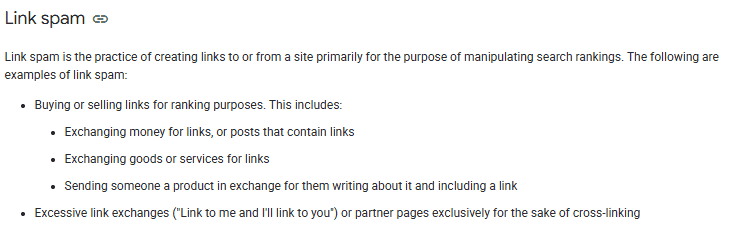
The risk here is higher because Google’s spam policies prohibit excessive link trading for ranking and cross-linking.
Resource
Here, you do not pay for a set number of links. Instead, you pay for the time a personal account manager and an outreach team spend on your business.
This model is common among UK SEO teams and top link building agencies. It is very clear what they are doing, yet it can be hard to guess exactly how many referring domains you will get each month.
Custom
Custom or project-based managed link building is usually best for long-term ranking. Companies like uSERP offer a bespoke package that starts with a deep backlink audit.
With custom plans, you don’t just get niche edits. These companies build linkable assets and use digital public relations to earn authority placements. This is a relationship-based product meant for lasting search engine rankings because it focuses on your specific goals.
Before choosing a partner with a custom model, make sure they offer or run an enterprise SEO audit before signing the contract. Not only does this demonstrate their professionalism, but it also helps set KPIs for the pages that need the most help.
Metrics that actually matter
Many people only care about domain authority or domain rating. These authority metrics are okay to start with, but they do not tell the whole story. A site can have a high score yet still get minimal organic search traffic and no lead generation.
That is a huge red flag because it means search engines do not actually trust the site with real users. The most vital factor is relevant content. A link from a low-authority website (DR40) in your exact niche is better than a high-authority website (DR80) link from a generic blog.
Look for sites that have a natural link profile and rank for their own ranking keywords. Check their guides and make sure they have an editorial vetting process. This shows they are a real leader in their space.

Screenshot taken by the author
If you’re also considering a website redesign SEO strategy, you must think about how to keep your old links. Losing authority during a move can hurt your rankings for a long time.
Pricing breakdown: Why costs vary so dramatically
Pricing for link building can range from $100 to $2,500 for one link.
Low-quality links
Low-quality links for $100 usually come from mass outreach to bad sites (i.e., link farms, PBNs). These sites exist solely to sell guest posts, so they have no real audience. Using these is a fast way to get a Google penalty.
Mid-tier links
Mid-tier SEO link building costs between $300 and $700. These link building packages usually include a basic content marketing strategy. You will get a mix of guest blogging and link insertion on real sites.
This is a good choice for a growing business looking to improve its backlink profile. Most companies in this range will let you see the sites before the link goes live.
High-quality links
High-quality editorial backlinks often cost $700 to $2,000 or even more. This price covers a full content team and their prospecting work. Experts like uSERP justify this pricing by getting links on DR50+ domains.
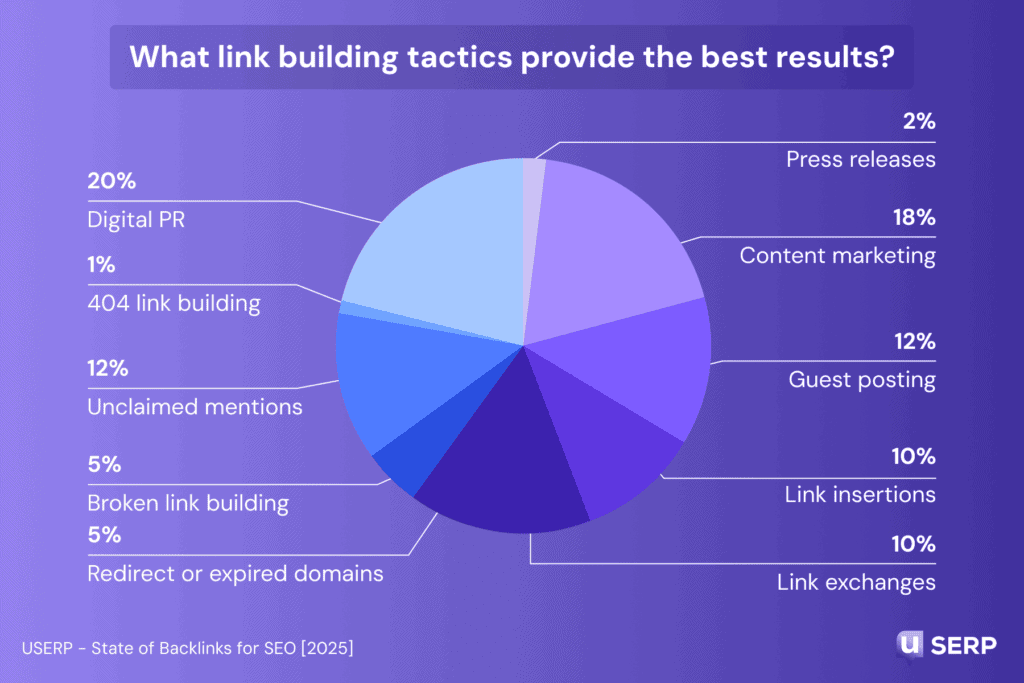
These are authority placements that actually move your rank, usually with high-quality digital PR. In fact, uSERP’s State of Backlinks Report 2025 (referenced above) found that 20% of SEOs believe that digital PR link building provides the best results.
That’s why partnering with the right option not only earns you long-term quality links but also shortcuts your growth.
The due diligence checklist
Before you buy any link building packages, you have to do your homework. Even SEO agencies with good search performance might cut corners. You need to check their white-hat history, so make sure they are not using any link farms.
Because one bad link can hurt your whole site, it is much better to take your time and find a partner who values quality over speed. If they promise dozens of links in the first week, they are probably not doing real outreach.
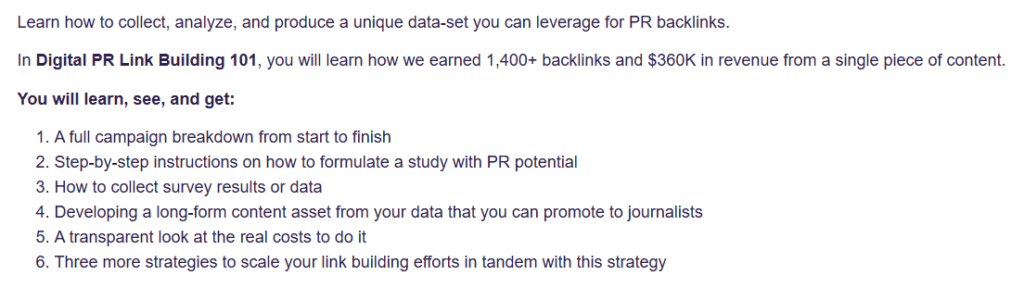
If you want to vet them properly, check out the Digital PR Link Building 101 course for full training. It is a great way to understand the process and know which questions to ask SEO agencies before committing.
Critical questions to ask every provider
Thorough vetting is essential because even agencies with great portfolios can deliver poor results. Try to get a full picture of the agency and what (realistic) results you can expect.
Use these questions to find the right fit for your niche and goals:
What is your outreach method?
Red flags include mass automated software. You want a partner who researches each prospect manually and sends personalized pitches.
This leads to better pitches and protects your reputation, boosting your success rate.
Can I see sample placements with traffic data?
Transparent portfolios are a green flag. Avoid providers who refuse to share examples or only show domain rating scores.
You should check the actual content, its placement within the body copy, link relevance, and site traffic using tools like SimilarWeb and Google Analytics.
Do you use PBNs or link networks?
The answer should be an emphatic “no.” Google can detect and penalize PBN usage, which can destroy years of hard work.
A white-hat provider will clearly explain their manual process rather than offer vague or defensive responses.
What is your replacement policy?
A study by Ahrefs reports that large sites can lose 5%–95% of their links. Good providers account for this and will promise to replace lost links within 30-60 days at no extra charge.
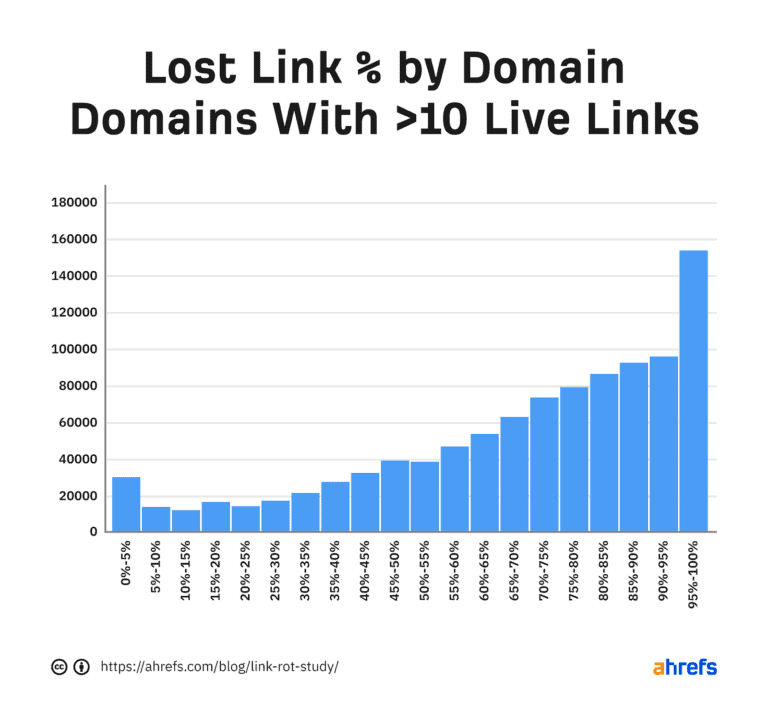
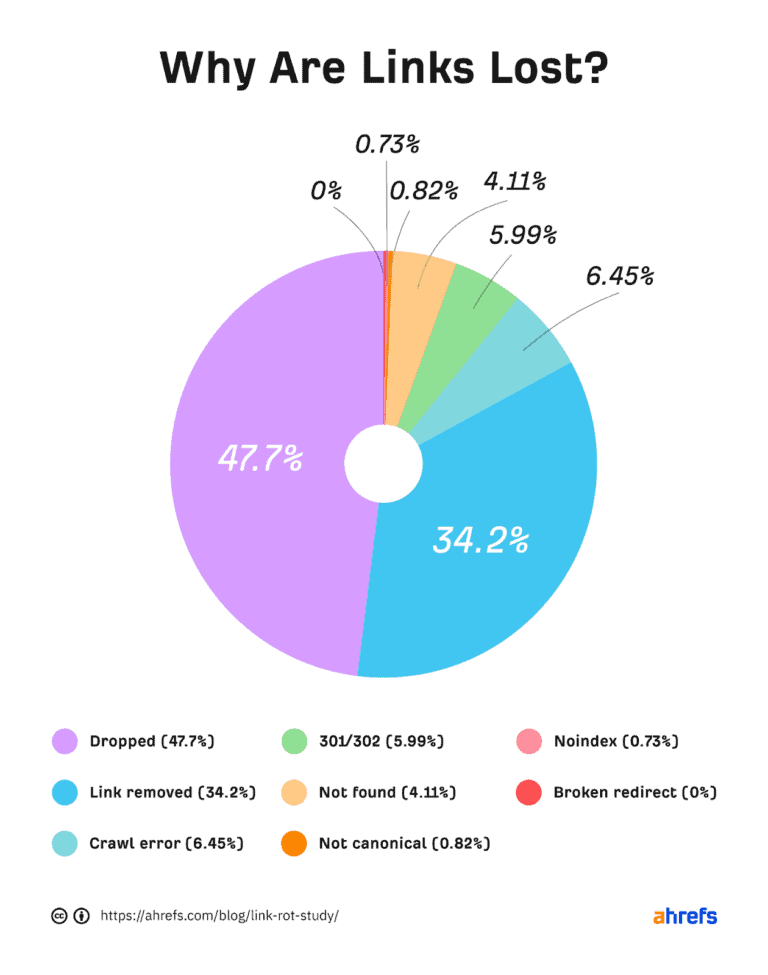
Avoid any agency that says links are not guaranteed to stay live. Links rot for many reasons, and technical SEO audits can help recover and fix broken links.
How do you vet domain quality?
Vetting should go beyond just checking authority metrics.
Green flags include:
- ✅Topical relevance
- ✅Manual reviews
- ✅Traffic analysis
- ✅Spam scores
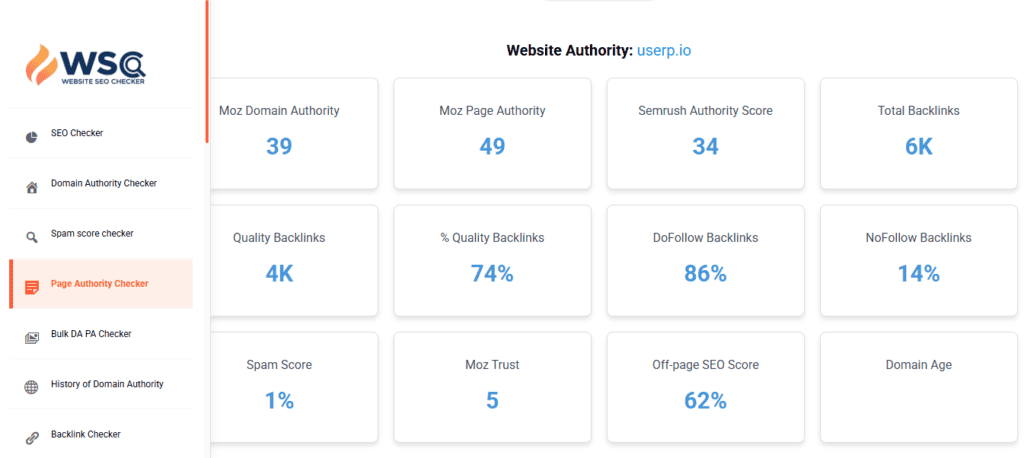
You want to see referring domain diversity and a spam score under 5% to stay safe.
Can you provide references from similar businesses?
Willingness to connect you with 2-3 similar clients is a strong sign of quality. Speak directly with these references about their results and timeline.
This shows the provider is a relationship-based product that delivers sustainable outcomes.
Warning signs and red flags
The link building world is full of “too good to be true” offers.
If you spot these red flags, it is time to look elsewhere:
- 🚩 Extremely low prices: $50-100 per link almost always indicates PBNs or link farms.
- 🚩 Guaranteed specific DR levels: “We guarantee 20 DR70+ links” is mathematically impossible with pure white-hat methods.
- 🚩 Instant delivery: Real editorial outreach takes a long time. It usually takes 4 to 8 weeks minimum to get a good link live.
- 🚩 Anonymous sellers: Beware of providers with no company website, team bios, or verifiable track record.
- 🚩 No content creation: Real editorial sites require custom content, not just a simple anchor text insertion.
- 🚩 AI content creation: Publishing large amounts of AI-generated low-quality content that’s not heavily edited is a recipe for Google bans. (Source: Google)
- 🚩 Vague about methods: A reputable partner will clearly explain their outreach and vetting steps.
- 🚩 Paid links disguised: Sites that only publish sponsored content with dofollow links are a major footprint.
- 🚩 Outsized promises: “We get links from Forbes for $200.” If it sounds impossible, it almost certainly is.
As we asked top SEOs about AI, the consensus is clear: quality signals, like editorial backlinks, matter even more in an AI-driven search landscape.
Optimizing the package for 2026 ROI
Buying link building packages is just the start. The real ROI comes from aligning those links with business goals.
You should always prioritize relevance over pure metrics. Remember, a DR40 link from a site dedicated to your niche is far more valuable than a generic DR80 placement. Human-vetted links are the ultimate trust signal in 2026.
To ensure your investment works, provide your vendor with detailed target page data and keyword research. Focus on product pages with commercial intent or blog posts that are close to ranking. You should know that SEO changes daily, so your implementation must support your most valuable assets in real time.
To properly track ROI, you can’t just look for the number of links. Monitor organic traffic to linked pages and watch for improvements in keyword rankings in the SERPs.
Over time, these signals should translate into changes in your conversion rate that impact your revenue. Some people wonder, “Is SEO still worth it?” in the AI era, but strategic links prove the value is higher than ever.
Conclusion
Finding the right link building packages is about finding a balance between pricing and safety.
The best package is never the cheapest one, but the one that builds the most authority for your website using white-hat methods.
Focus on content quality and real manual outreach to ensure your backlink profile remains healthy and resistant to algorithm shifts.
In 2026, ranking factors for Google are very complex, but a great link is still the best way to prove you are an expert. Check the best providers, start small with a test package, and look for long-term wins.
Subscribe to SEO Power Plays for weekly tips on link building and AI search. Join 12,000+ SEO pros staying ahead of the crowd.