Generative engine optimization services help businesses show up in AI answers. They make it easier for LLMs and answer engines to reach, read, and cite their content. Traditional SEO aims for search rankings. GEO aims for a place inside AI responses.
This guide covers what GEO services include, what they cost, and how to vet providers before you hire. You’ll learn what work to expect, how pricing works, and how to spot agencies that just renamed old SEO as GEO.
Highlights
- Know what real GEO services include before you compare agencies or prices.
- Judge providers by their work, methods, and reports, not AI sales claims.
- Expect ongoing citation monitoring, content improvements, and technical audits instead of a one-time SEO package.
- Compare prices by scope of work, ongoing tracking, and long-term work, not page count.
- Ask for proof of AI citations, prompt tests, and competitor reports before you sign a GEO contract.
What generative engine optimization services actually are
A GEO service helps businesses get seen across AI search platforms. A good provider doesn’t hand over one tip and walk away. It audits the site, makes fixes, measures results, and keeps refining the work as AI search changes.
The work should produce clear deliverables, regular reports, and a plan for what comes next.
Generative engine optimization services make the most sense for companies that already rely on organic search. That includes SaaS companies, ecommerce brands, publishers, and agencies. These businesses hire GEO providers to show up more often in AI answers.
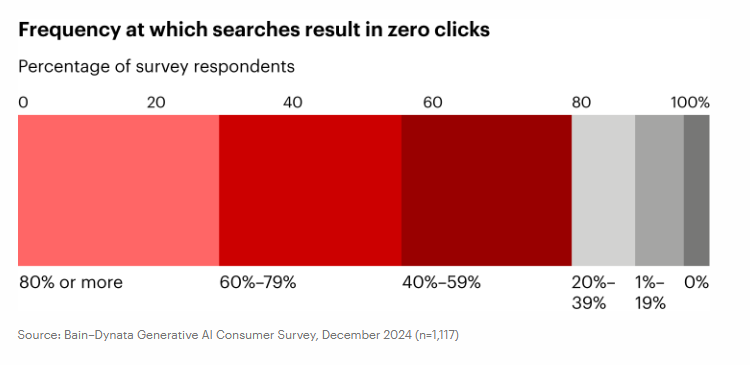
This matters because search behavior is changing. Bain & Company’s Generative AI Consumer Survey found that 80% of consumers rely on zero-click search results like AI summaries for at least 40% of their searches. As more searches end without a click, showing up inside AI answers matters more and more.
GEO is not a one-time project. AI systems, websites, and competitors keep changing. So providers should keep tracking results, update their advice, and improve visibility over time.
What generative engine optimization services should include
The value of a GEO deal comes from the work behind it. If an agency sells GEO, you should be able to point to specific deliverables. Those tasks help AI systems reach, read, and cite your content. If they’re missing, you’re likely looking at old SEO with a new label.
The table below shows what a real GEO provider should deliver. It also lists warning signs that you’re paying for a renamed SEO retainer.
| Legitimate GEO service | Why it matters | Generic SEO rebrand / red flag |
| Bot access audit | Confirms AI crawlers can reach your content and identifies technical barriers | Talks about AI optimization but never checks crawler access |
| Content restructuring | Makes pages easier for AI systems to extract and cite | Only updates keywords or metadata |
| Schema implementation | Improves machine readability and reinforces entities | Adds schema without validation or a clear purpose |
| LLM citation monitoring | Tracks where AI assistants cite your brand and competitors | Reports rankings but provides no AI citation data |
| Brand mention tracking | Measures AI visibility over time and identifies new opportunities | Shares vague AI visibility scores with no supporting evidence |
Bot access and crawlability audit
Your provider should check whether AI crawlers can reach priority pages. The audit should cover:
- OAI-SearchBot and other search crawlers
- GPTBot and other training crawlers
- robots.txt and server-level blocks
- noindex and X-Robots-Tag directives
- Crawl errors and access restrictions
OpenAI’s official crawler documentation explains the split. OAI-SearchBot controls search visibility. GPTBot controls possible training use.
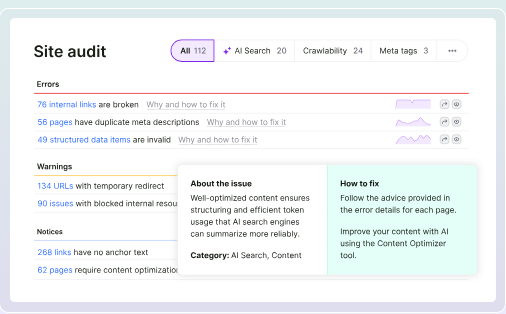
For example, an old robots.txt rule may block an AI search crawler from a product knowledge base. The report should:
- Identify every issue
- Explain why it affects AI visibility
- Outline the fixes needed to remove those barriers
Content restructuring for extractability
Strong GEO providers don’t just rewrite content. They reorganize pages so answer engines can lift a useful passage on its own. That means answer-first sections that stand alone. Each one gets a clear heading, short paragraphs, and lists or tables where they help.
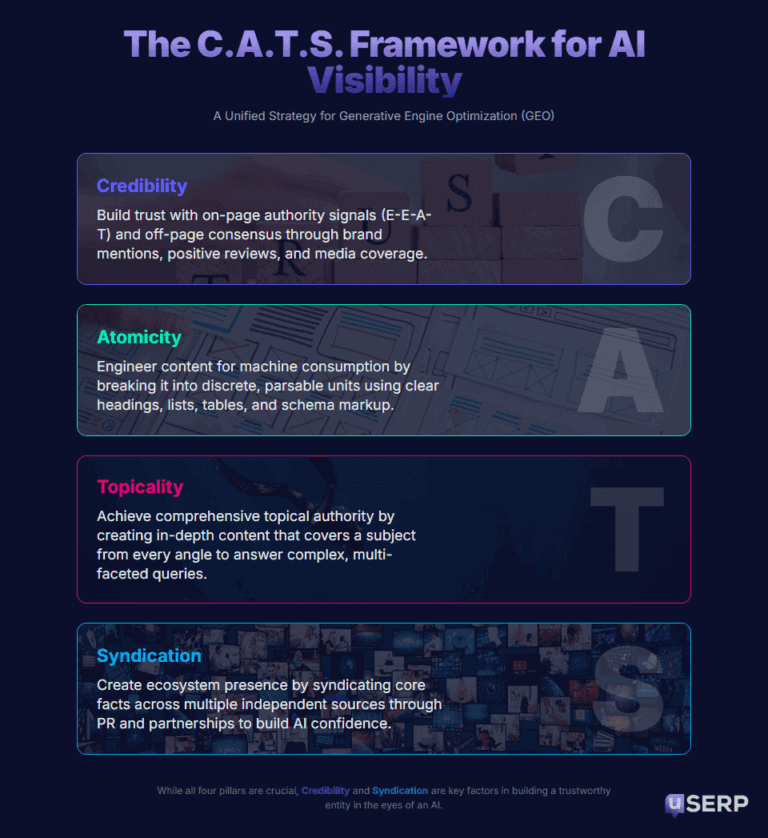
uSERP’s C.A.T.S. framework for AEO calls this atomicity. It means breaking big topics into clear units an AI system can pull out. Providers should also strengthen citation architecture by:
- Improving factual sourcing
- Supporting claims with authoritative references
- Maintaining entity consistency across related pages
- Improving internal links so topic clusters are easier for AI systems to understand
Schema markup implementation
Schema should help AI systems understand what a page is about and how its parts relate. It is not a shortcut to more citations. A GEO provider should add structured data only when it matches what the page shows.
For instance, that may mean Article schema for blog posts or Organization schema for company details.
Google Search Central’s structured data guidelines say markup should represent the page’s visible content. The provider should test the markup and write down what they added. Schema can help machines read a page. But it doesn’t guarantee AI citations.
LLM citation monitoring and brand mention tracking
A GEO service shouldn’t end after technical work is complete. Providers should keep measuring:
- Whether AI assistants cite your brand
- How often those citations appear and which competitors receive them instead
- Which pages earn the most visibility over time
For example, a report may show that your comparison pages earn citations. Your product pages, though, rarely appear in AI answers. According to BrightEdge analysis, ChatGPT mentions brands 3.2 times more often than it provides citations. So citations alone don’t tell the full story of AI visibility.
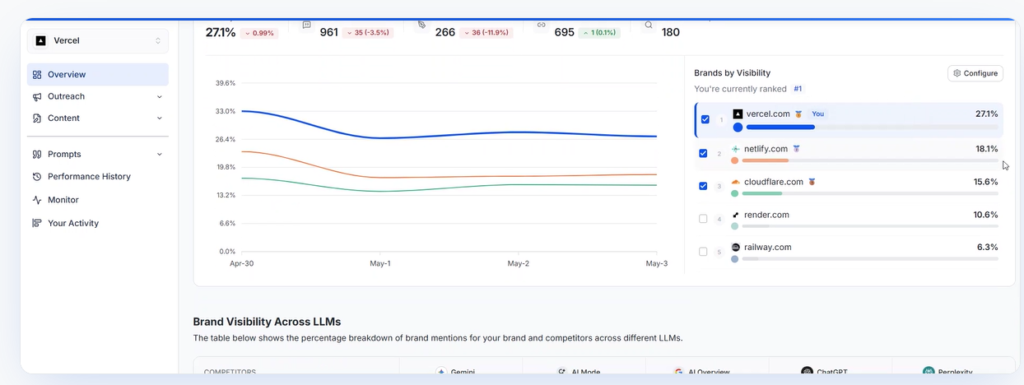
Many GEO providers also use tracking tools such as AirOps or Wellows. These tools track AI citations, brand mentions, prompt visibility, and competitor results. You should get regular reports that show progress and point to where the next round of work should focus.
What GEO is not, and the red flags to watch for
The term “GEO” is still new. That makes it easy for agencies to use it in different ways.
Before you sign a contract, look past the sales pitch. Focus on what the provider will deliver and how they’ll measure results.
Rebranded SEO retainers with new buzzwords
Some agencies have renamed their professional SEO services as GEO without changing the work. Check the proposal for AI-specific work. Look for a bot-access audit, content restructuring, and citation tracking. If those are missing, ask what has actually changed.
For example, a provider may promise “AI optimization” but only deliver keyword updates and backlink reporting. Real GEO goes beyond traditional SEO. The provider improves how AI systems reach, read, and cite your content. Then they check whether those changes bring more citations and brand mentions.
Vanity visibility metrics with no citation evidence
A report that says your “AI visibility score” improved doesn’t tell you if AI assistants actually use your content. Those scores can add context. But they shouldn’t replace proof of real results.
For example, if a provider claims your AI visibility increased, they should also show:
- Which prompts were tested
- Where your brand appeared
- Which competitors earned citations
- How those results changed over time
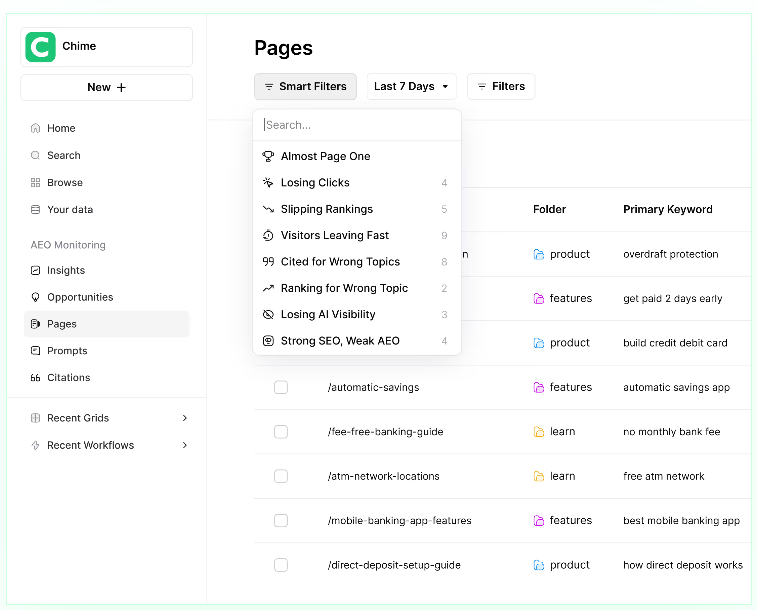
Before you hire an agency, ask exactly how they measure success. A good provider ties every result to real citations, prompt tests, competitor checks, and trends. A single score isn’t enough.
GEO pricing: What different service tiers actually cost
Prices for generative engine optimization services vary. Each provider bundles a different mix of audits, fixes, content work, and tracking.
uSERP’s best AEO and GEO agencies for AI searches comparison puts common monthly costs at $3,500 to $10,000+. Broader programs can cost more. One-time audits are usually priced per project, so compare the work behind each quote.
Here’s a price comparison:
| Service tier | Typical price | What’s included | Best suited for |
| Entry-level / tactical engagement | Custom one-time project fee | Technical audit, implementation roadmap, limited content restructuring | Businesses evaluating GEO or starting with a small scope |
| Full-service GEO retainer | $3,500–$10,000+ per month | Monitoring, prompt testing, reporting, content updates, competitor tracking | Businesses investing in ongoing AI visibility |
Entry-level and tactical GEO engagements
An entry-level GEO project is usually a starting point. The agency reviews your site and finds the biggest issues. Then it delivers a roadmap that shows what to fix first. You should also expect some content restructuring on a few priority pages.
For example, the engagement may include:
- Bot access audit
- Schema recommendations
- Updates to a few high-value articles
Once that work is done, the project ends. Ongoing citation tracking, prompt tests, and regular reports aren’t part of this tier.
Full-service GEO retainers
A full-service GEO retainer is for businesses that want steady gains. The provider doesn’t stop after the first fixes. Instead, it keeps:
- Measuring results
- Testing prompts
- Updating content
- Tracking competitors
That ongoing work helps the provider spot new opportunities as AI search changes.
For instance, a monthly report might show that your buying guides gained AI citations. At the same time, rivals passed your product pages for the same prompts.
Those findings shape the next round of content updates, prompt tests, and technical fixes.
How to evaluate a GEO provider before you pay
Before you compare prices or sign a proposal, look at how the provider works. A strong GEO partner has a clear process, set deliverables, and reports that show real progress.
If an agency can’t explain its methods, it’s hard to tell if you’re getting real GEO services or a rebranded SEO package.
Questions to ask in the sales conversation
The sales call should show you how the agency handles AI search, not just what it promises. Good providers answer with clear examples, written processes, and reporting methods. They don’t lean on broad marketing claims.
Ask questions such as:
- Which AI platforms and prompt sets do you test?
- Can you show before-and-after citation or mention data from a client engagement?
- What tools do you use, and what do they measure?
- How do you report success?
- What deliverables will I receive each month?
- How often will you review and update our content?
- How do you monitor competitors?
If a provider says it improves AI visibility, ask how it measures those gains. Also ask how it will report them along the way.
What a legitimate GEO audit looks like
A GEO audit should explain why your content does or doesn’t appear in AI answers. Then it should give you a plan to improve. It should go beyond basic SEO notes and focus on what drives AI visibility.
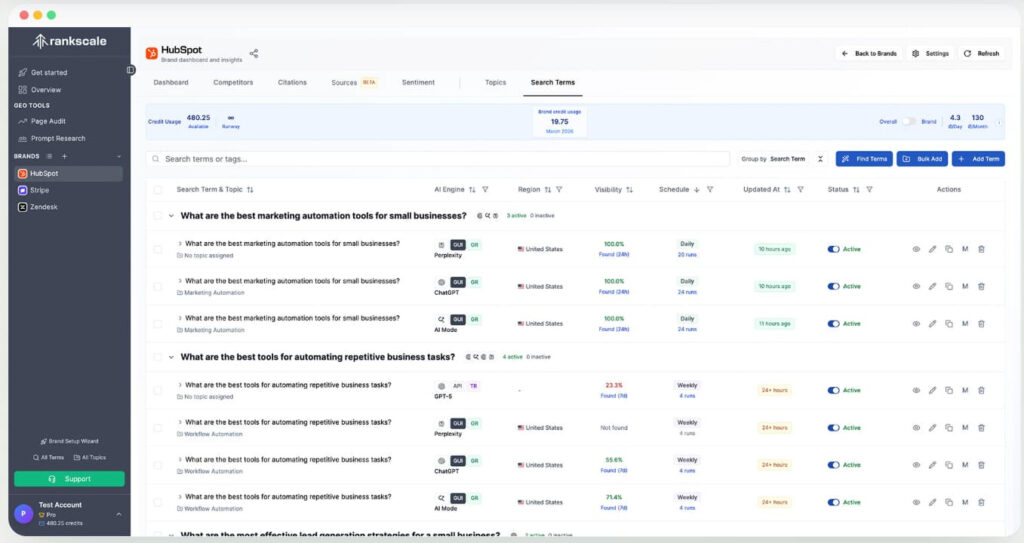
For example, a complete GEO audit should include:
- A technical crawl review
- A bot accessibility review
- A content extractability analysis
- An entity and schema review
- A citation benchmark against competitors
The final report shouldn’t stop at a list of issues. It should rank the fixes so you know what to do first and what each one should achieve.
Conclusion: How to find a GEO services provider that delivers real results
More agencies now add GEO to their service pages. That makes it harder to tell who offers real AI optimization and who has only updated the wording on an SEO package.
Before you hire, confirm:
- What work the provider will perform
- How they’ll measure success
- What you’ll receive throughout the engagement
The strongest providers track citations and brand mentions. They watch the same prompt set over time and keep improving key pages as AI search changes. They can explain each deliverable, tie it to a clear result, and show where the next round of work comes from.
For more AI search research, frameworks, and tips on choosing a provider, explore SEO Power Plays.
FAQs
How are GEO services different from SEO services?
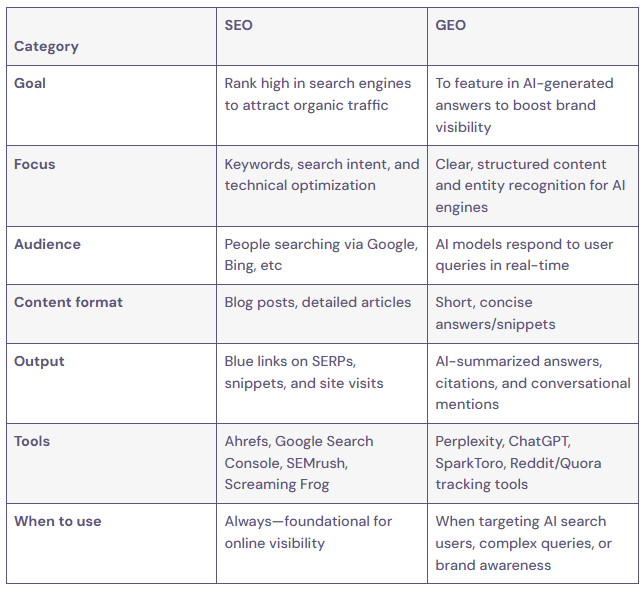
SEO aims to improve visibility in traditional search results. GEO aims to improve visibility inside AI answers. So GEO chases AI citations and mentions, not just rankings.
The two still share many technical tasks, such as site access, content quality, and structured data. But they aim for different results.
Here’s a quick GEO vs SEO comparison:
How much do GEO services cost?
The cost of GEO services depends on the scope of work and your site’s size. It also depends on whether you need a one-time audit or an ongoing retainer. Audits cost less because they end once the advice is delivered. Retainers include ongoing tracking, reports, tests, and updates, so they cost more.
How long does GEO take to show results?
There isn’t a guaranteed timeline for GEO results. Progress depends on how often AI systems crawl your content and how much work your site needs.
Treat GEO as an ongoing program. Set a baseline, track the same prompt set, update key pages, and compare results over time.